The 1 Train Cypher is a live rap performance series that takes place on the New York City subway, specifically on the 1 train between West 242nd Street and Broadway in the Bronx, heading toward Manhattan. This grassroots movement transforms a daily commute into a dynamic, unfiltered stage for hip-hop expression, where rappers, beatboxers, and performers gather in real time to freestyle, build on each other’s lines, and share personal stories in a setting that blends public transit with cultural performance. Source: rollingstone.com.
Origins in the Subway: A Cultural Touchstone
Steven Muelz, the founder of the 1 Train Cypher, first conceived the idea during his formative years in New York City. Born in the Dominican Republic and raised in Harlem and the Bronx, Muelz spent significant time navigating the city’s neighborhoods through the 1 train—an experience that became deeply embedded in his identity. From middle school through college, he relied on the 1 train to travel between schools, parties, and social events. It wasn’t just a mode of transportation; it was a cultural artery.
He recalls, ‘I was always on that 1 line. It just made sense to bring the cyphers there.’ The train, with its diverse mix of ethnic enclaves—Hispanic, African, Latino, African American, and other communities—was a living ecosystem of expression. Music, language, and community were already present in the form of spontaneous performances, graffiti, and street culture. Muelz recognized that while these moments were real, they were largely invisible to the public, captured only in fleeting glimpses by commuters or tourists.
His early exposure to hip-hop culture wasn’t through studio recordings or curated events. Instead, it came from the raw, unscripted energy of the subway—where people would freestyle, where MCs would drop bars in the middle of a ride, and where the rhythm of the train itself became a beat. This environment shaped his understanding of what hip-hop could be: not just a genre, but a language of community, resilience, and self-expression.
What Is a Cypher? A Historical and Cultural Evolution
A cypher, in its original form, is a circle of performers—typically rappers, beatboxers, or dancers—who take turns freestyling in real time, building on each other’s lines. The term originates from the Arabic word ‘sifr,’ meaning zero, which was adopted into European mathematics and later into English as ‘cipher.’ In the context of hip-hop, the word evolved to represent a cycle of knowledge, a shared space of artistic exchange, and a form of mastery.
Historically, the Five Percent Nation of Gods and Earths, a spiritual and cultural movement rooted in the Bronx and uptown New York, used the term ‘cipher’ to describe a group of individuals who engage in a cycle of knowledge and self-discovery. In their worldview, a cypher is not just a performance—it is a ritual of learning, where each participant contributes to a collective understanding of truth, identity, and expression.
For Muelz, the 1 Train Cypher was not a copy of a pre-existing model. It was a reimagining of that tradition for the modern age. Rather than relying on studio production or polished performances, the cypher prioritized authenticity, improvisation, and community. As he explains, ‘I was like, “I want something more raw and something more authentic to New York.”’ The goal was not to create a polished, commercial product, but to preserve the spirit of early hip-hop—where talent emerged organically, without the need for fame or media validation.
How It Started: From a Small Gathering to a Public Phenomenon
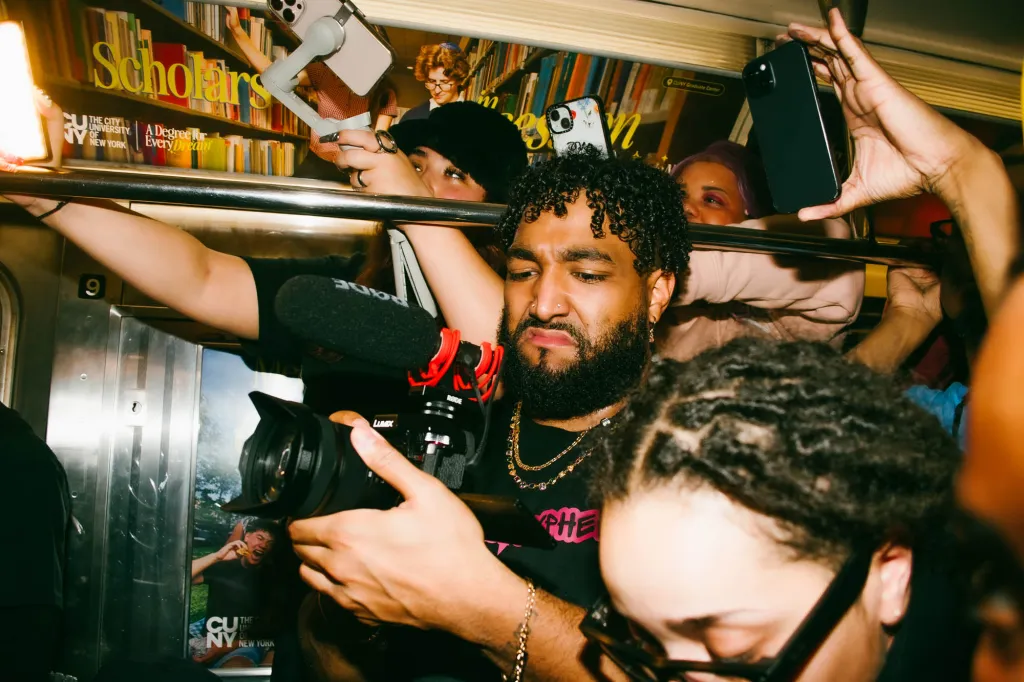
The first 1 Train Cyphers began in 2018 as a small, intimate event involving Muelz, his brother, and a few close friends. They handled the camera, music, and logistics themselves—no professional crew, no production team, just a few individuals committed to capturing the raw energy of the moment.
At first, only a handful of artists participated—mostly friends and collaborators from the Bronx and Harlem. The performances were unscripted, spontaneous, and driven by the desire to test skills in real time. The environment was electric: the train car was packed, the air thick with anticipation, and the energy of the crowd was palpable.
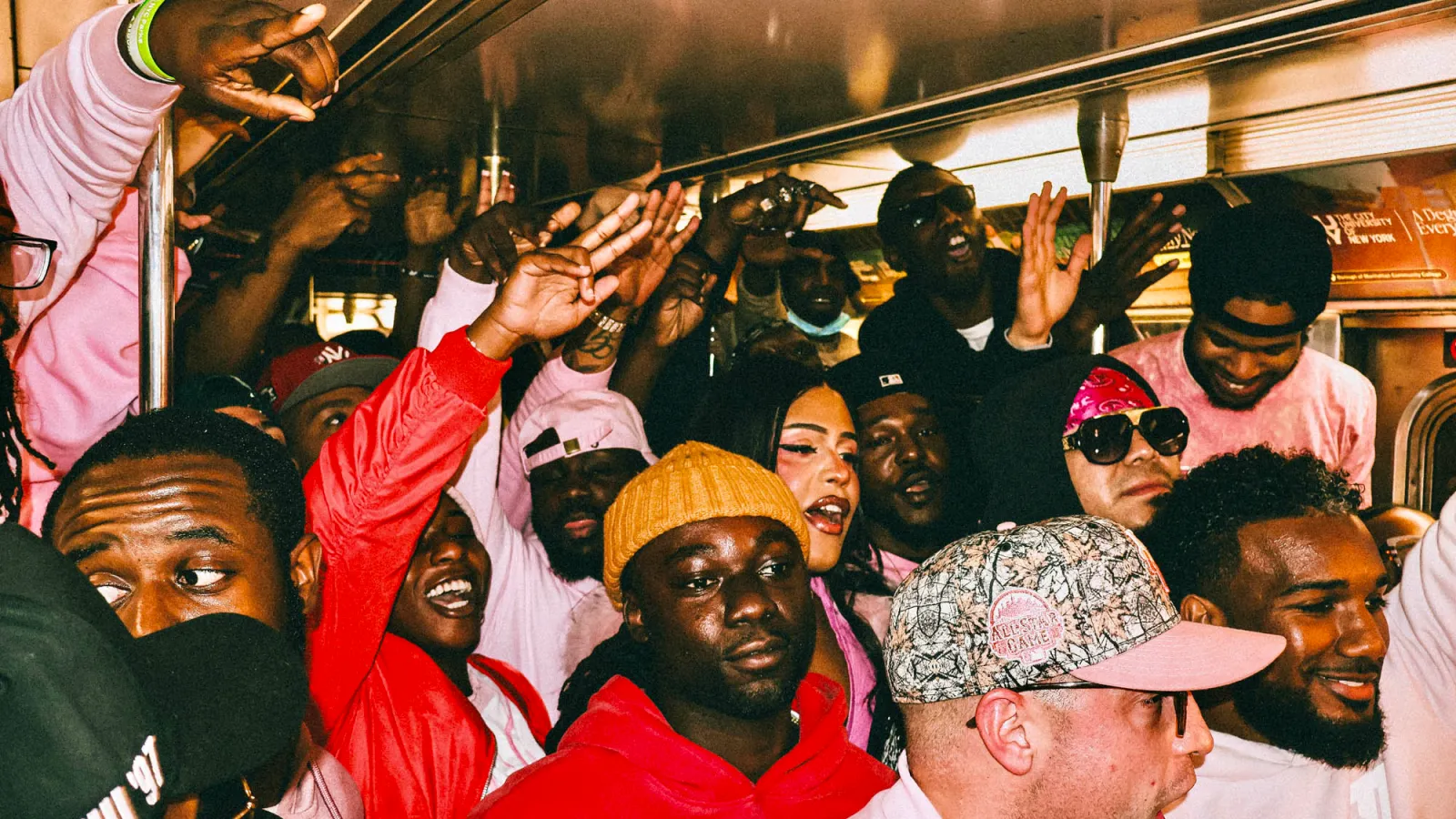
What began as a personal project quickly evolved when riders started participating. Muelz remembers, ‘People started recording it, people were cheering, and I was like, “Damn, we’ve got something real special here.”’ This shift marked a turning point—the cypher began to feel less like a performance and more like a shared cultural experience. Commuters who had no prior connection to hip-hop suddenly found themselves engaged, listening, reacting, and even joining in.
As more people began to record the events, the content spread organically through social media platforms like Instagram, TikTok, and YouTube. The raw, unfiltered nature of the performances—no edits, no mulligans, no studio polish—resonated with audiences who were tired of curated, commercialized versions of hip-hop. The authenticity of the moment became its greatest strength.
Community and Inclusivity: A Space of Equality
One of the most powerful aspects of the 1 Train Cypher is its emphasis on equality. In the subway car, there is no hierarchy—no distinction between a rising star and a veteran rapper. As Mike, a team member, puts it: ‘Forget your name, we don’t care how many followers you have—everyone is the same in that moment.’
This sense of equality is central to the cypher’s philosophy. In a world where social media often amplifies fame over authenticity, the 1 Train Cypher offers a space where talent is judged not by a follower count or a record deal, but by the depth of expression and the honesty of the performance.
Participants often share real-life struggles—financial, emotional, familial—without the pressure of performance or audience expectation. A millionaire might speak about the anxiety of maintaining wealth, while someone in poverty shares stories of family conflict or sibling rivalry. These moments create emotional resonance because they reflect the universal human experience.
As Cory Gunz, a Bronx rapper known for collaborations with Lil Wayne, Meek Mill, and Nicki Minaj, observes, ‘It’s gutter, it’s straight hip-hop from the ground.’ This phrase captures the essence of the cypher: it is not about spectacle or fame, but about grounding hip-hop in the realities of everyday life. The music becomes a mirror, reflecting the lives of people from all walks of life.

Key Figures and Endorsements: From Legends to Emerging Artists
The 1 Train Cypher has drawn attention from both established and emerging artists, signaling its growing influence within the hip-hop ecosystem.
Wyclef Jean, a Grammy-winning artist and cultural figure, participated in a special performance of his single ‘Back From Abu Dhabi’ in November 2025. His involvement was not just a nod to the platform’s authenticity—it was a statement about the value of community-driven art. As he says, ‘It’s like when I used to watch martial-arts movies when I was younger. It’s the best martial artists getting together. With a cypher, you’ve gotta show up with your best pen game, right?’

Styles P, a member of The Lox, has praised the cypher as essential to New York hip-hop culture. He describes it as a reflection of the essence of MCing in real time, outside the studio. ‘The cypher shows the essence of New York hip-hop, MC’ing, and what it’s like to be an MC when you’re not in the studio,’ he says. This sentiment is echoed in his decision to bring the event to his dispensary, Strains for Life, and later to a state park, where he emphasized that it gives visibility to artists who don’t often get a platform.
Doechii, a Grammy Award-winning artist, has publicly supported the platform, recognizing its role in promoting authentic, community-based expression. Her endorsement underscores the growing acceptance of the cypher as a legitimate and vital form of cultural performance.
Cory Gunz sees the cypher as a moment of passing the torch. He describes it as a space where emerging artists can rub shoulders with legends, gaining exposure and inspiration without the pressure of commercial expectations. ‘It’s like being in the Coliseum and the legends you see and hear about,’ he says. ‘And then being able to be in the same rooms with them, exposing you to their audience and vice versa.’
Evolution and Expansion: Beyond Hip-Hop
While the 1 Train Cypher began as a rap-focused event, its creators have recognized the need to expand its scope to reflect the diversity of New York’s music culture. Muelz envisions a future where the platform includes R&B;, Latin music, DJs, and other genre-specific experiences.
He explains, ‘I’m excited about that chapter. We’re always going to do hip-hop. That’s forever, but we’re also going to invite other genres as well to showcase different types of talent from the other side.’ This expansion is not a dilution of the core mission—it is an evolution. The platform is designed to remain rooted in community and authenticity, while embracing the rich tapestry of musical expression found throughout the city.
For example, a Latin music performance could highlight the cultural roots of the Bronx and the Caribbean diaspora, while a R&B; set could reflect the emotional depth and storytelling traditions of Black and Latin communities in New York. These performances would not be commercialized—they would be presented as part of a broader cultural narrative, emphasizing connection, identity, and shared experience.
Philanthropy and Social Impact: A Commitment to Responsibility
One of the most meaningful aspects of the 1 Train Cypher is its integration of social responsibility.
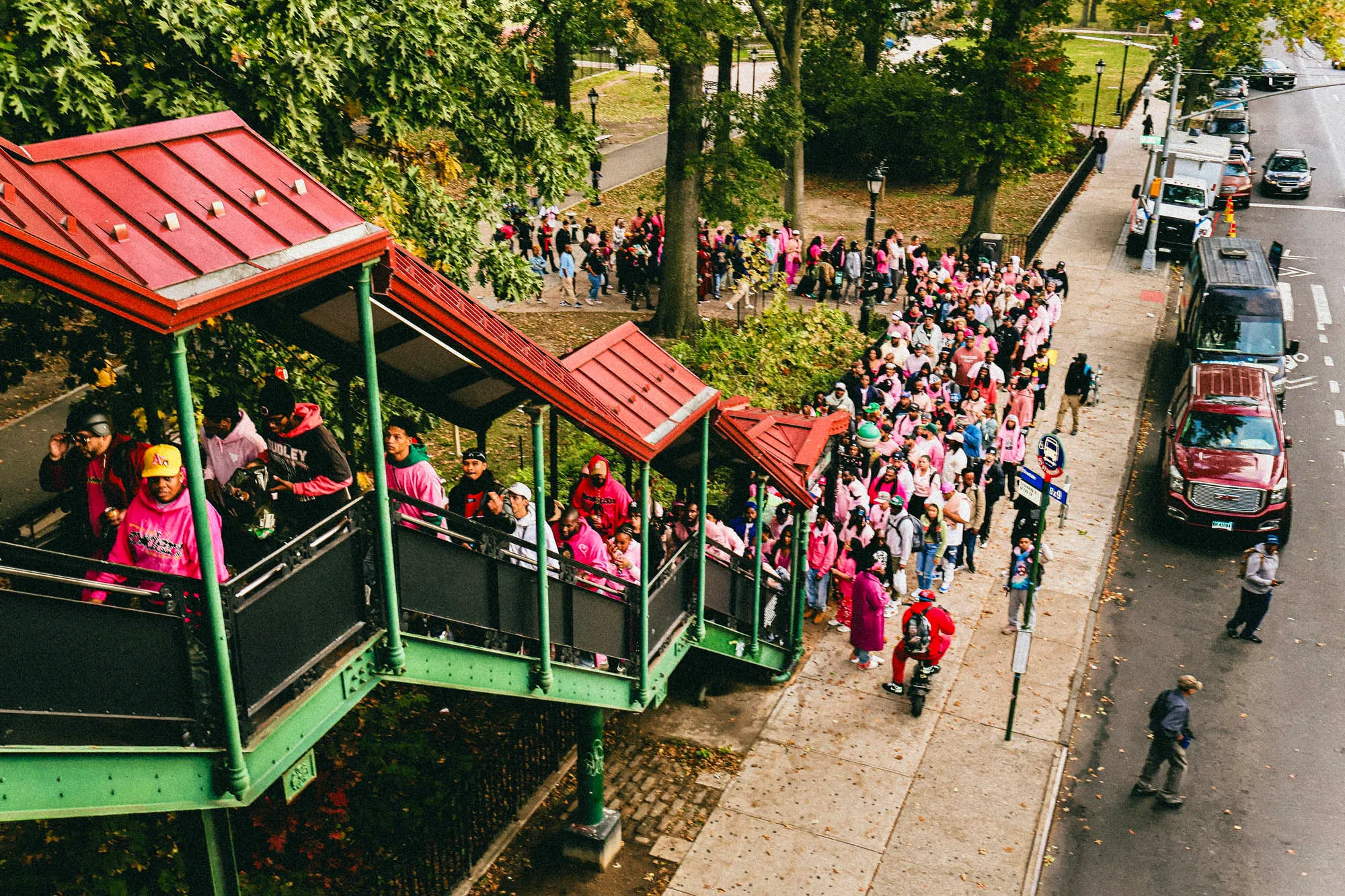
He explains, ‘Breast cancer runs deep in my family, so that’s something that I want to make sure we can raise money [for] and donate.’ The event included the sale of specially designed shirts, all of which were worn in pink, symbolizing solidarity and awareness. The initiative not only raised funds but also created a space where art and activism intersected.
Later, in March, an all-women cypher was held, providing a dedicated platform for female artists. This event reinforced the platform’s commitment to inclusivity and gender equity. It demonstrated that the cypher is not just a space for male-dominated rap culture—it is a venue for diverse voices to emerge, grow, and be heard.

These initiatives reflect a broader philosophy: that cultural expression should not exist in isolation. It should be connected to real-world issues, and it should serve a purpose beyond entertainment. The 1 Train Cypher is not just about music—it is about community, representation, and social action.
Why It Matters: A Living, Evolving Cultural Expression
The 1 Train Cypher transforms a daily commute into a cultural experience. Unlike traditional music venues, which are often confined to specific locations and require advance bookings, the cypher happens in real time, with no production crew, no mulligans, and no edits. The energy is unfiltered and immediate.
It reflects a deeper truth: that hip-hop is not just music—it is a language for documenting lives, neighborhoods, struggles, aspirations, and relationships. In the subway, where people from all backgrounds move through the city, the cypher becomes a living archive of New York’s cultural identity.
As Muelz puts it: ‘It means everything. It means life. It means culture. It means perspective. It gives us a new angle of “This is who we are. This is what we stand for. This is what we believe in.”’
Future Vision: From the Subway to the Stadium
Muelz envisions a future where the 1 Train Cypher becomes a touring platform. He has expressed interest in bringing the event to major venues such as Madison Square Garden and Yankee Stadium, where the energy of the subway could be amplified on a larger scale.
However, he emphasizes that the core of the cypher remains its freedom—its ability to allow anyone, regardless of fame or background, to participate. The subway, with its inherent accessibility and inclusivity, remains the ideal setting for this form of expression.
As Gunz concludes: ‘In New York, the subway is culture. It’s going through the whole city, from hood to hood. It’s getting a taste of every style. You’re getting a chance to see a gumbo of the city’s best in one spot. It shows the significance of the journey. That’s what it correlates to. Hip-hop is a train that never stops.’
The 1 Train Cypher is not just a performance—it is a living, evolving expression of New York’s cultural identity. It reminds us that culture is not something that is preserved in museums or recorded in albums. It is something that happens in the streets, in the subway, in the everyday moments of life. And in that moment, when a stranger on a train begins to freestyle, the city itself becomes a stage.
Sources & further reading
Featured image: 1 Train Cypher Event. Via original publisher. Image source