The cable wide stance anti-rotation chop is a core exercise designed to improve stability and strength by challenging the body’s ability to resist rotational movement. Source: muscleandfitness.com.
What Is the Cable Wide Stance Anti-Rotation Chop?
This exercise targets the deep core muscles, including the transverse abdominis and obliques, which work together to stabilize the spine and pelvis.
Unlike standard cable chops, where the torso and hips move together, the anti-rotation version requires the body to remain stable while the arms and upper body move independently.
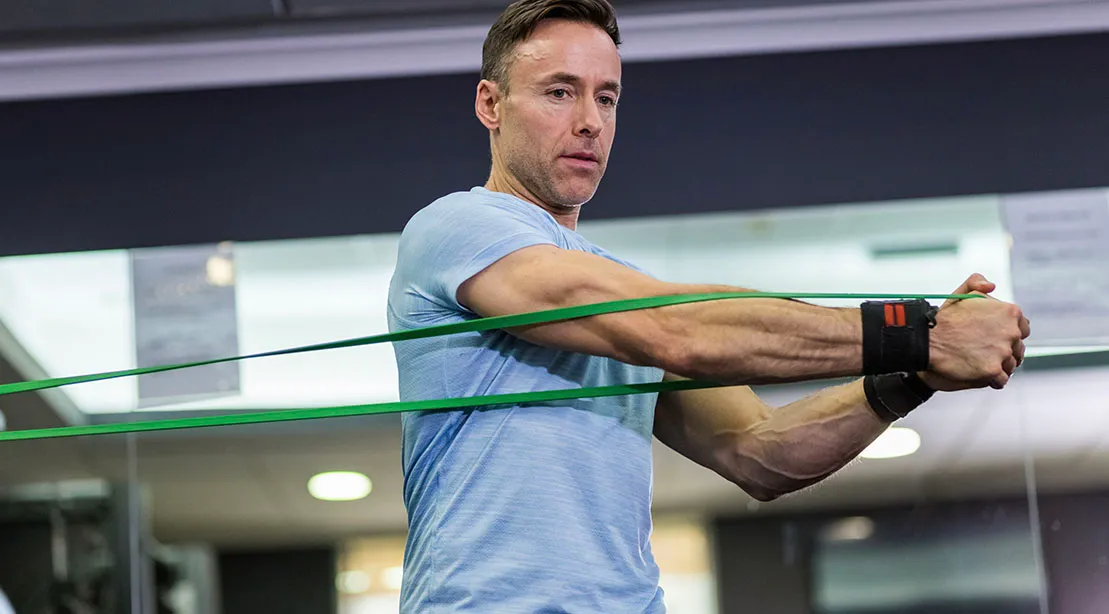
The movement starts with feet shoulder-width apart, a neutral spine, and arms extended in front of the body. As the arms move in a chopping motion, the body must resist twisting or rotating.
How the Exercise Works
The core’s primary role is to transfer force between the upper and lower body without energy loss. This chop variation emphasizes that function.
By maintaining a stable pelvis and spine, the exercise trains the core to act as a structural bridge between the upper and lower limbs.
Participants must engage the deep abdominal muscles to prevent the torso from tilting or rotating during the motion.
The cable provides resistance, increasing the challenge as the arms move in a wide arc.
Key Benefits of the Exercise
- Improves core stability and balance.
- Enhances coordination between upper and lower body movements.
- Reduces risk of injury during dynamic activities like lifting or running.
- Supports better posture and body alignment in daily life.
These benefits are particularly valuable for athletes, fitness professionals, and individuals engaged in physically demanding tasks.
How to Perform the Exercise
- Stand with feet shoulder-width apart, knees slightly bent.
- Hold a cable attachment with both hands, arms extended in front of the body.
- Engage your core by drawing your belly button toward your spine.
- Begin the chop motion by moving your arms in a wide arc, like chopping wood.
- As you move, keep your spine and pelvis stable—do not rotate or tilt.
Beginners should start with lighter resistance and focus on form before increasing intensity.
Why It Matters in Core Training
Core strength is not just about visible abs. It’s about how well the body controls movement and maintains balance.
Many people overlook the role of the core in daily activities and sports. This exercise highlights that function over appearance.
For those training for performance or injury prevention, mastering anti-rotation movements is a foundational skill.
Limitations and Considerations
The exercise requires proper form and balance. Poor technique can lead to strain or injury, especially in the lower back.
Individuals with pre-existing spinal conditions or joint issues should consult a healthcare provider before attempting.
It is not a standalone solution. Core strength must be built through a variety of movements and consistent practice.
There is limited research on long-term benefits of this specific variation. Most evidence comes from general core training principles and biomechanical studies.
What to Watch Next
As core training evolves, more research may emerge on how anti-rotation movements affect performance and injury rates.
Exercise routines that combine stability and dynamic movement are likely to gain more attention in fitness science.
For a full-body approach to core training, readers may also explore Sarah Michelle Gellar’s cable and core routine, which includes similar movements.
For more on core stability, check out our Fitness & Movement section.
Sources & further reading
Featured image: original publisher image. Via original publisher. Image source