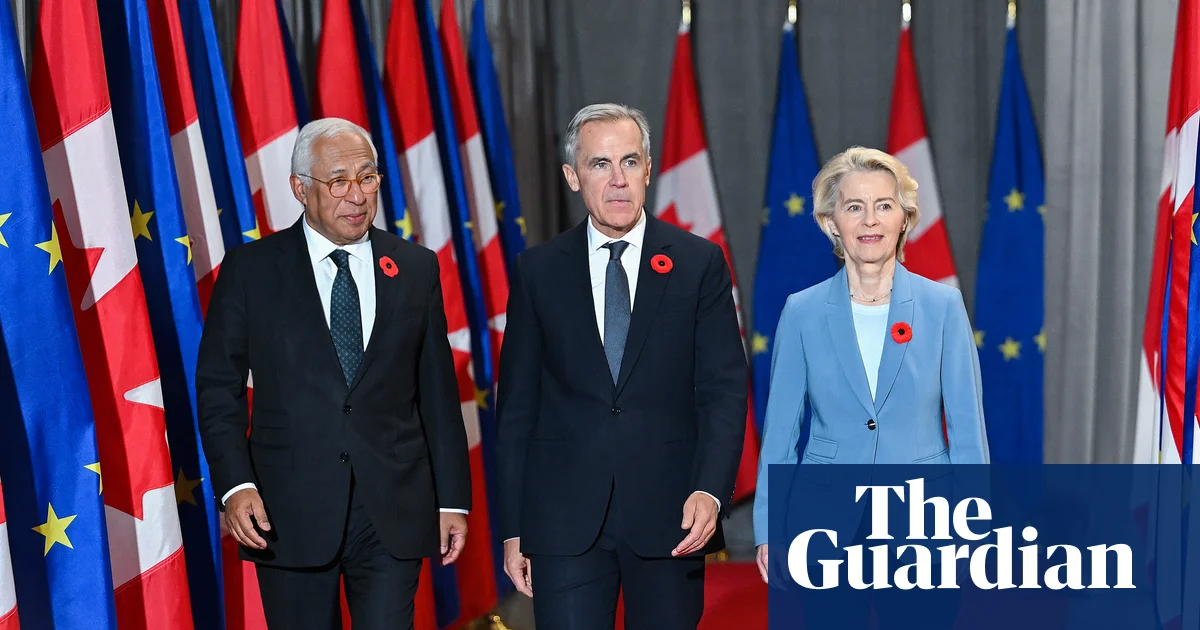
Canada and the European Union have announced a new alliance called the Alliance for the Future. The partnership, unveiled at a summit in Montreal, is open to other nations and aims to provide stability amid growing global uncertainty. Source: theguardian.com.
What Happened at the Summit
Canada and the EU held a two-day summit in Montreal. It marked a shift in Canada’s foreign policy, moving from reliance on the United States to deeper ties with Europe.
The alliance is described as a ‘protective canopy’ for citizens. It also acts as a shield against sudden geopolitical shifts. These include climate emergencies, democratic erosion, and trade weaponization.
They said it could bring 'unprecedented stability and opportunity'—a vision for long-term global cooperation.
Key Agreements and Commitments
- Canada and the EU will build a more integrated market worth tens of billions of dollars. This will reduce trade barriers and improve cross-border commerce.
- Trade and travel restrictions will decrease. This will make it easier for goods, services, and people to move between the two regions.
- Joint educational programs will launch. These include student exchanges, shared curricula, and research collaborations.
- Canada will gain access to Europe’s supercomputing network. This will let Canadian researchers train AI models using high-performance computing resources.
- Cohere Inc, a Canadian AI company, will merge with Germany’s Aleph Alpha GmbH. The new company will have dual headquarters in Berlin and Toronto.
Why This Matters
Canada has long depended on U.S. companies for defense and technology. This dependence has grown concerning after recent events.
In mid-October, Elon Musk, a dual Canadian citizen, slowed Starlink and Starshield services over Ukraine. This disrupted military communications and defense operations. It raised alarms about private companies controlling critical infrastructure.
Carney said: ‘We are not waiting for the future of AI to be decided somewhere else by those we don’t know, or by whom we don’t trust.’ This shows a national push for trusted, independent AI development.
The new AI partnership with Germany reduces reliance on American tech giants. It strengthens Canada’s technological sovereignty. It also builds resilient supply chains in AI and defense.
Supply Chains and Economic Pressure
Von der Leyen noted that trusted suppliers of energy, minerals, and semiconductors are now used as tools of political pressure. This trend affects everyday consumers and businesses.
Carney said: ‘More competition, more choice’ could bring stability to supply chains. Together, they could ‘withstand shocks, together.’ This principle supports a fairer, more resilient global trade system.
Associate Membership: A Controversial Proposal
Canada is being proposed as an ‘associate member’ of the EU. This is not legally binding but would mark formal recognition of Canada as a strategic partner.
Von der Leyen said the idea shows shared ambition, trust, and creativity. She added: ‘This [associate membership] is a partnership not against anyone else, but for our common strength.’
However, some EU members worked to remove the term from a draft statement. They feared it might confuse aspiring nations or weaken the EU’s institutional clarity.
Antonio Costa, European Council president, said Canada is ‘by far the most European of the non-European countries.’ He called the relationship the ‘most closest, deepest, and strongest’ ever between the EU and a non-European nation. This reflects shared values in democracy, innovation, and environmental stewardship.
Associate membership remains untested. A clearer definition will be discussed at a 2027 summit. Then, both sides will decide if the partnership can evolve into something more formal.
Domestic and Regional Reactions
The summit caused tension in Quebec. After Ottawa refused to let Premier Paul St-Pierre Plamondon of the Parti Québécois speak publicly, he criticized the invitation.
In a social media post, he wrote: ‘The federal government would have us believe that the premier of Quebec being granted permission to serve shrimp cocktails at a reception constitutes an acceptable and sufficient form of influence for representing Quebec’s interests.’ He accused the government of ‘vassalization and invisibilization’ in exchange for better seating.
This incident shows the gap between national diplomacy and regional identity. While the alliance promotes global cooperation, it also highlights the need for inclusive representation in international events.
What to Watch Next
There, the scope of associate membership will be clarified. Observers will also track progress in AI, defense, and supply chains.
Canada’s role in global technology and trade could shift significantly. As the world faces climate change and digital transformation, this alliance may become a model for resilient, cooperative global partnerships.
Sources & further reading
Featured image: original publisher image. Via original publisher. Image source