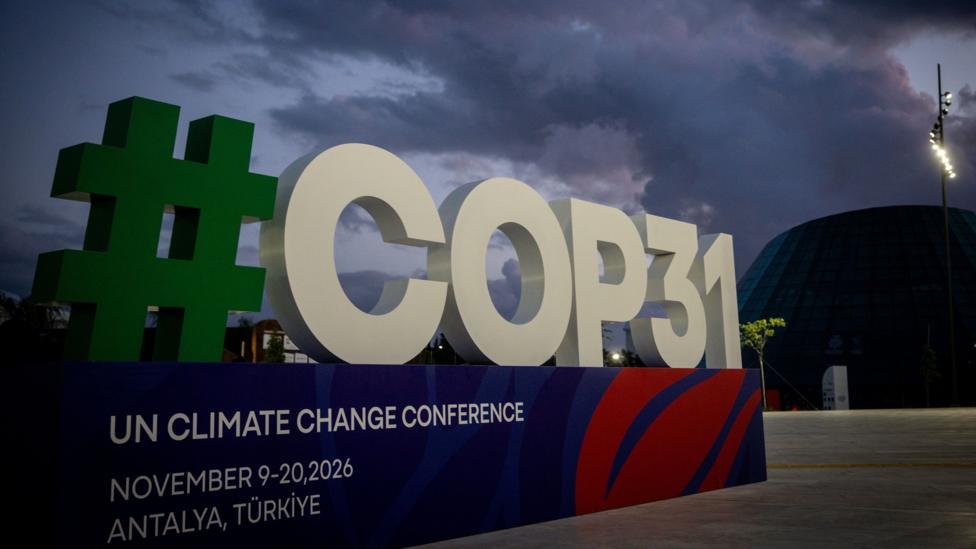
The COP31 climate summit in Antalya, Turkey, marked the longest-running UN climate negotiations in history. Despite clear evidence of worsening climate impacts, the talks failed to produce a central political agreement—the Antalya Pacts—on key actions to reduce emissions. The summit was widely billed as an ‘implementation COP,’ emphasizing the need to turn existing commitments into tangible action rather than forge new, sweeping agreements. Source: bbc.co.uk.
Climate Reality Was Clear
By the time COP31 began, the world had already seen multiple climate emergencies. These events made it evident that global warming had already surpassed the 1.5°C threshold set in the 2015 Paris Agreement. That threshold is critical—crossing it would trigger irreversible environmental changes.
Almost a decade ago, the Intergovernmental Panel on Climate Change (IPCC) issued a warning about the consequences of a 1.5°C rise in global temperatures compared to a 2°C rise. According to the IPCC, such a rise would result in:
- Sea levels rising by 10cm, exposing an additional 10 million people to flooding
- Increased ocean acidity, threatening marine ecosystems such as coral reefs and shellfish populations
- Extreme heat in every inhabited region, with heatwaves becoming more frequent and intense
- More severe droughts and reduced agricultural productivity in key food-producing regions
During the summit, many countries acknowledged this reality. UK Energy Secretary Miatta Fahnbulleh stated at the close of the talks: ‘We are not in a phase of denial. We are in a phase of reckoning.’
Carbon Dioxide Removal Was Proposed
The draft agreement included a call for carbon dioxide removal (CDR)—a process to extract greenhouse gases from the atmosphere. This was a significant development, as it marked the first time a final COP agreement had explicitly referenced CDR.
Tree planting remains a natural form of CDR, but it is limited in scale and permanence. Forests can be damaged by wildfires, pests, or deforestation, and the carbon stored in trees may be released over time. The IPCC has noted that natural sinks like forests can absorb only a fraction of the carbon emissions needed to stabilize the climate.
Other technological solutions—such as direct air capture (DAC) and enhanced weathering—have been studied for decades but remain in early stages of development. These methods are expensive, energy-intensive, and have not yet been deployed at a scale sufficient to make a meaningful contribution to climate mitigation. Critics argue that placing reliance on CDR could divert attention and funding from the more urgent need to reduce emissions at the source.
Nevertheless, the inclusion of CDR in the draft agreement signals a shift in climate policy thinking. It reflects growing recognition that climate action must go beyond emission reductions and include active removal of carbon from the atmosphere. This could become a key component of future climate strategies, especially as emissions continue to rise in the absence of rapid decarbonization.
Geopolitical Divides Deepened
The central political agreement collapsed over a dispute about fossil fuels. Countries rejected including any language on fossil fuel use in the final text, arguing that such language would undermine energy security and economic stability in oil-producing nations.
Just three years earlier, at COP28 in Dubai, nations had committed to phasing out fossil fuels and transitioning to clean energy. The failure to reaffirm that pledge at COP31 raised serious doubts about political consistency and the durability of international climate commitments.
Rich nations also failed to agree on how much more climate finance to provide to developing countries. Some countries argue that the current funding is insufficient to meet adaptation needs, especially in vulnerable regions like small island states and sub-Saharan Africa.
Australia’s Minister Chris Bowen described the situation as the most complicated and fraught geopolitical environment in living memory. On the final day, EU representative Darragh O’Brien said: ‘The negotiations have been distorted by a small group of countries that prioritize energy exports over climate justice.’
Meanwhile, Russian delegate Sergei Kononuchenko, speaking in English, criticized the EU for offering climate finance only in the form of loans—calling it ‘an old colonial distribution of labour under a new banner.’ He argued that such financial mechanisms perpetuate dependency and fail to provide long-term, sustainable development support.
Implementation Over Innovation
COP31 was billed as an ‘implementation COP’—a shift from building new agreements to putting into action those made in previous years. This reflects a broader evolution in the role of the UN climate process. For the first 30 COPs, the focus was on establishing international frameworks and setting binding targets. Paris 2015 established the 1.5°C target and created a system for regular progress reviews. Since then, agreements have been made on:
- A climate damage fund at COP27
- A transition away from fossil fuels at COP28
- Tripling renewable energy capacity at COP28
- Increased climate finance at COP29
- Adaptation support at COP30
The international architecture for tackling climate change is largely in place. Now, the challenge is implementation. Camilla Born, who helped shape the UK’s COP26 strategy and now leads Electrify Britain, said: ‘COP31 made the process more procedural—less about fundamental negotiations and more about ensuring the machinery actually works.’
While the central political agreement failed, progress was made on procedural matters. Countries agreed on:
- A just transition framework to protect workers and communities during the energy shift
- How climate adaptation funds would be distributed and monitored
- Support for vulnerable regions, including small island states and landlocked nations
- Improved transparency in reporting on climate action and progress
There were 164 agenda items. Some were resolved. Others will be addressed at COP32, including crucially the work programme responsible for driving forward action on cutting emissions. Without a clear, coordinated work programme, progress on emissions reductions will remain fragmented and inconsistent.
Energy Security Is Driving Change
The International Energy Agency (IEA) notes that disruptions to oil and gas supplies through the Strait of Hormuz represent the largest energy supply shock in history. The Strait has been a critical chokepoint for global oil shipments, and recent geopolitical tensions have significantly increased the risk of supply disruptions.
As uncertainty grows, countries are increasingly motivated to shift energy sources from imported fossil fuels to domestic electricity. This shift is not just driven by climate goals but by energy security concerns. Countries like India, Japan, and South Korea have already begun investing heavily in domestic solar and wind capacity to reduce reliance on foreign energy.
Technology has also changed. Solar panels, batteries, and electric vehicles are now cost-competitive with fossil fuel-based alternatives. The IEA’s Fatih Birol said: ‘We are not entering the age of electricity, we have arrived at the age of electricity.’ He emphasized that energy security and climate policy are now ‘closely aligned’—a shift that may reduce the need for formal negotiations to drive energy transitions.
Still, businesses point to policy barriers as key obstacles. Dr Jennie Dodson of the World Business Council for Sustainable Development said: ‘While clean energy is now cost-competitive, infrastructure development and permitting remain major hurdles. Without streamlined regulations and consistent policy signals, private investment will remain hesitant.’

What COP31 Shows About the Process
For the first 30 COPs, the focus was on building international climate frameworks. Paris 2015 established the 1.5°C target and created a system for regular progress reviews. Since then, agreements have been made on a climate damage fund, a transition away from fossil fuels, and increased support for adaptation.
The international architecture is largely in place. Now, the challenge is implementation. Camilla Born said COP31 made the process more procedural—less about new pledges and more about ensuring existing commitments are delivered.
Some suggest the summit may no longer require a central political agreement. Such a text has not been mandatory for years. Many nations have managed without it, and the absence of a binding agreement does not necessarily mean the process has failed.
Alden Meyer, a veteran climate negotiator now at the climate think tank E3G, argues the COP process is not failing—it is acting as a mirror. If governments fail to meet their targets, the problem is with the nations, not the system. ‘The COP process reflects the reality on the ground,’ he said. ‘If the reflection is disappointing, the issue is not with the mirror—it’s with the people behind it.’
Despite the failure to pass a central agreement, the summit did not end in silence. Progress was made on adaptation funding, just transition, and monitoring. These procedural outcomes matter. They show that climate action continues, even when high-level agreements fall apart.
For the next phase, COP32 will need to address the work programme and emissions reduction framework. Without these, the global energy transition will remain uncoordinated. As climate impacts grow, the role of formal negotiations may evolve. But governments still have a critical role in enabling clean energy infrastructure and policy.
What’s Next After No Deal at COP31?
Will COP31 End With a New Global Climate Deal?
COP31 Climate Talks in Deadlock Over Fossil Fuels
Africa Demands More Climate Finance at UN Summit
Original source: BBC News
Sources & further reading
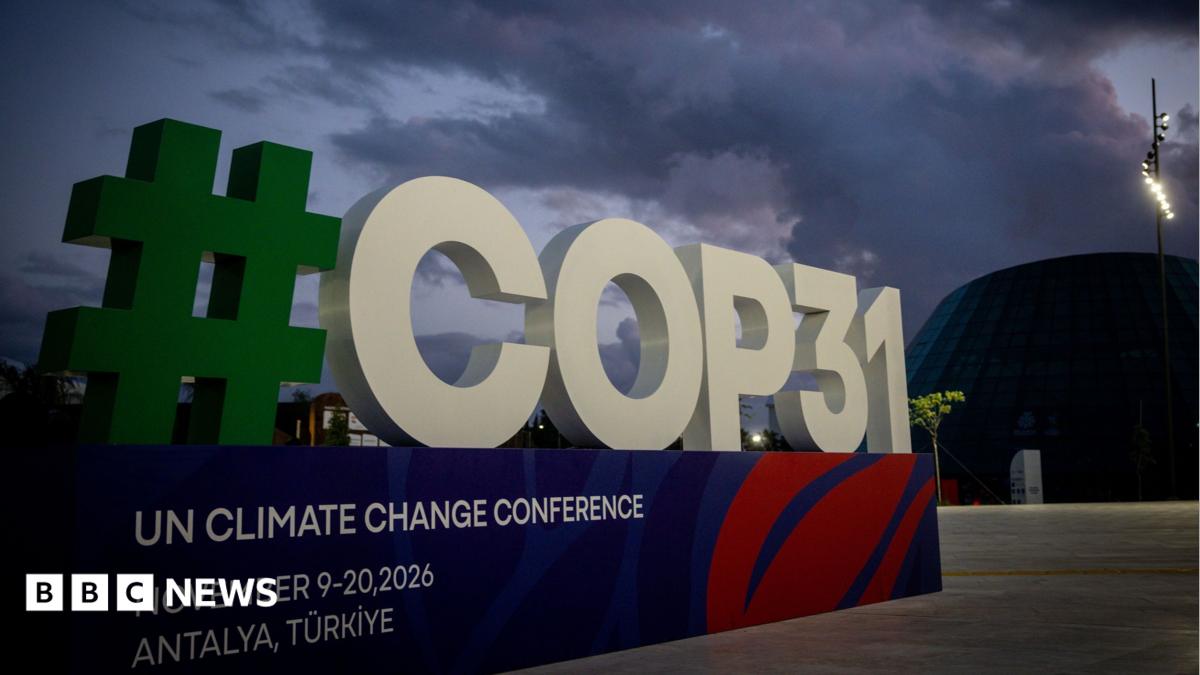
Featured image: A white 3D sign reads "#COP31" in green and white on a blue and red block that reads "UN Climate Change Conference November 9-20, 2026 Antalya Turkiye". In the background is a black building and a purple sky with clouds. Via original publisher. Image source