Young people are increasingly leading research on school issues. This movement, called Youth Participatory Action Research (YPAR), empowers students to design, conduct, and lead research on topics that directly affect their daily school lives—like teacher relationships, mental health access, classroom climate, and peer interactions.
Students Lead Research on School Issues
Students in a California school district noticed their voices were left out of key policy decisions, such as dress codes and extracurriculars. They questioned why their lived experiences—what they felt, valued, and saw as important—were ignored in decisions shaping their school lives.
To close this gap, students launched a research initiative. They conducted peer surveys and focus groups to understand student views on school policies, classroom dynamics, and belonging. Their findings showed many students felt invisible, unheard, and disconnected from leadership.
Based on this evidence, students proposed actionable recommendations: more student-led events, regular input sessions during policy planning, and opportunities to serve on school advisory committees.
By the next semester, the principal invited students to join several leadership committees. These groups now shape programs like student social events, after-school activities, and classroom curricula. This shift means students are no longer just participants—they are now contributors to school design and governance.
How YPAR Works in Schools
YPAR is a research approach that positions students as expert knowledge producers. It is not a compliance task or academic assignment. Instead, it builds on the idea that youth have lived experience and insight into daily school challenges.
Students are trained to identify real-world problems, design research questions, collect data through surveys and interviews, analyze results, and develop evidence-based recommendations.
YPAR is not limited to high school. It has been successfully used in middle and elementary schools. In some cases, young students use mapping or arts-based methods to explore issues like neighborhood safety, school access, and community resources. These projects show YPAR can adapt to different age groups and developmental stages.
Students often choose topics that matter to them—like how teachers communicate, how lunch programs meet diverse needs, or how students feel about being included. This personal connection increases motivation and ownership, making the research process meaningful and impactful.
Three Levels of Impact
- Systems-level: In an Ohio high school, students investigated mental health services. A schoolwide survey found services existed but were largely unknown. Students responded by creating posters and digital flyers and organizing informational assemblies. They also shared findings with teachers, counselors, and the superintendent, proposing a district-wide plan to improve visibility and access.
- Relationships-level: Middle school students in California found they often felt unsupported by teachers. Through surveys and focus groups, they learned students felt rushed, disrespected, or ignored. Their research showed teachers could improve mentorship by practicing active listening, showing respect and compassion, being flexible with assignments, and using classroom activities that elevate student voices. As a result, students recommended student-led teacher evaluations—structured, peer-reviewed feedback systems.
- Student-level: High school students in California conducted English and Spanish focus groups on attendance and belonging. They found new students often struggled to adjust and felt isolated. Based on this, students proposed a buddy program, schoolwide workshops on racial stereotyping, and lunchtime soccer tournaments to build connection and reduce loneliness.
Why This Matters for Students and Schools
Many U.S. youth report feeling disengaged and disconnected from school. This disengagement links to lower attendance, increased anxiety, and higher depression rates. A strong sense of belonging is a key predictor of student success in attendance, academics, self-esteem, and social well-being.

When students feel seen, heard, and valued, they are more likely to participate and take ownership of learning. YPAR helps bridge the gap between students and leadership by giving youth a platform to share insights. This improves school climate and builds students’ confidence in influencing change.
Through YPAR, students develop critical skills—data collection, analysis, communication, and leadership—that transfer to future academic and career paths. These skills prepare them for real-world problem-solving in civic, professional, and community settings.
How to Start a YPAR Project
For educators, the first step is assessing capacity. This includes time, staffing, funding, and project scope. A YPAR project may last one unit, a full semester, or an entire academic year—depending on goals and resources.
Facilitators—like teachers or program leaders—should introduce YPAR where students are. Some have had negative past experiences with research, like long, impersonal surveys or reports with little feedback. To build trust, start with activities that celebrate student experiences—like sharing stories of student-led initiatives or student creativity in art or peer leadership.
It’s essential to ask students: What issue matters most to you? Why do you want to research it? What change do you hope to see? These questions help clarify motivation and deepen investment in the process.
As students move through the process—from designing surveys to analyzing data and presenting findings—they often grow more confident and passionate. Many report shifting from passive learners to active agents of change.
Power Sharing: A Core Principle
In traditional schools, students often just respond to questions—without input into how research is designed or interpreted. This creates a power imbalance where adults control knowledge production.
YPAR flips this. Students choose topics, design questions, collect data, and interpret results. Adults serve as mentors, offering training in research methods—like survey design or data analysis—but do not make decisions on behalf of students.
Power-sharing requires intentional practice. Facilitators must teach students how to navigate authority, respond to feedback, and influence decisions. This includes helping students present findings and advocate for recommendations in meetings with staff and administrators.

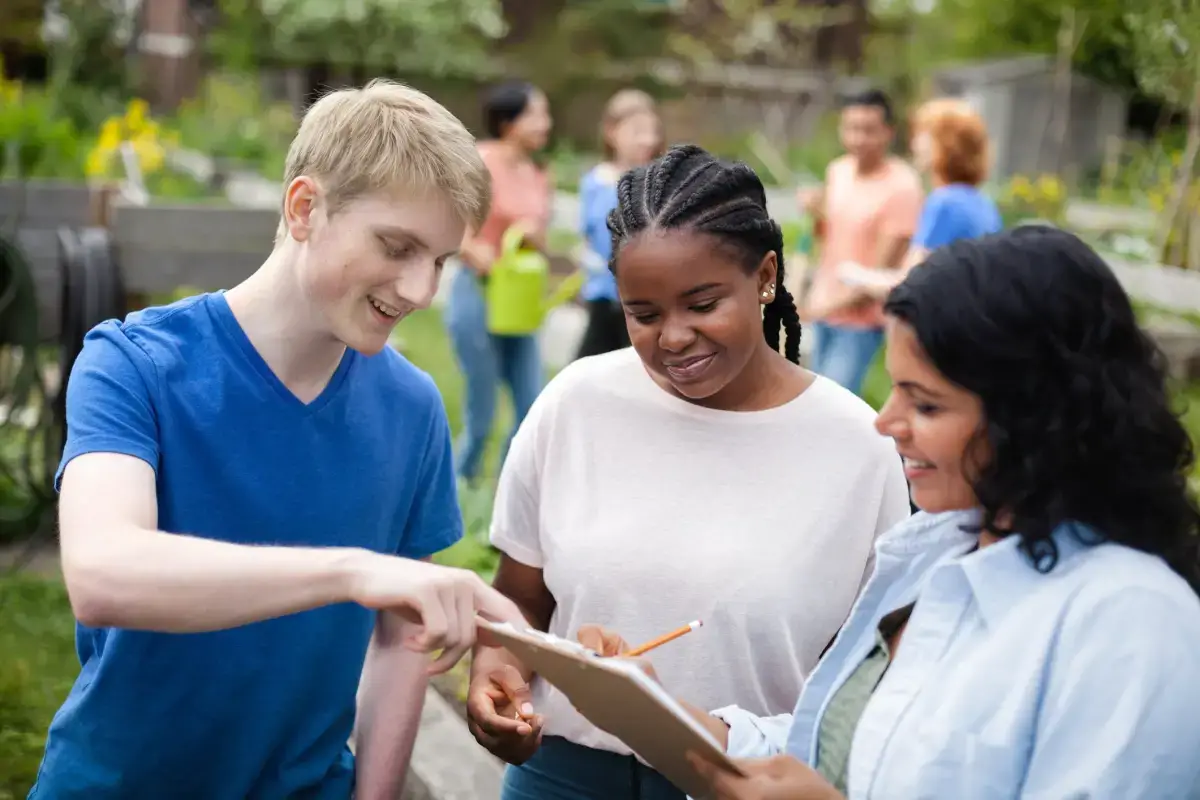
Students consistently say it matters for adults to keep them in the loop. They want to know if their research was used, whether recommendations were considered, and what actions followed. Tokenism—where YPAR is treated as a formality—must be avoided. When students see their voices are genuinely valued, they trust the school system and stay engaged.
Policy and Support for YPAR
YPAR aligns with national education goals. The National Institutes of Health has recognized it as a promising approach to address mental health and well-being, especially in areas like social isolation and exposure to unsafe environments.
Several states now require student voice in school decisions. California’s SB997 mandates student perspectives in school and district budgeting. Oregon, Ohio, and New Jersey have similar laws, ensuring youth have a formal role in shaping policies affecting daily life.
YPAR complements existing programs like social-emotional learning (SEL). These programs build emotional intelligence and interpersonal skills—skills directly supported by YPAR experiences. It also aligns with academic standards in research, data analysis, and civic engagement, offering real-world applications of classroom learning.
As more schools adopt YPAR, attention is growing on how to scale these efforts and ensure equitable participation. This includes addressing barriers like access to technology, language differences, and socioeconomic disparities. Future work will focus on inclusive YPAR programs that reflect diverse student experiences.
What to Watch Next
More schools are integrating YPAR into daily operations. The YPAR Hub offers lesson plans, project templates, and training modules. The YPAR Network connects educators, researchers, and practitioners across the U.S., enabling collaboration and knowledge sharing.
As YPAR grows, student-led research is becoming part of classroom discussions and policy meetings. This shift reflects a broader cultural change: schools are recognizing students as leaders, innovators, and community members.
YPAR shows students are not just learners—they are active agents in shaping school environments. When adults listen, respond, and act on student ideas, trust grows. Students feel more connected, engaged, and empowered. This creates a school culture where every voice—adult or young—has a place and purpose.
For more on student-led research, see the YPAR Hub or the original source at Greater Good.
For related content on belonging, see how to help newcomers feel included. For insights on youth leadership, explore what students taught us about connection.
Sources & further reading
Featured image: original publisher image. Via original publisher. Image source