For nearly four centuries, Rembrandt van Rijn’s 1642 masterpiece, The Night Watch, has captivated viewers with its dynamic militia figures. Now, scientists have revealed a hidden world beneath the surface: a thriving community of microorganisms. This discovery marks a shift in how we see art—not as a static object, but as a living entity shaped by time and human interaction. Source: smithsonianmag.com.
Microbes on the Canvas
Researchers from the Rijksmuseum and ARTIS-Micropia have collected 60 samples from 10 areas of the painting to map its surface microbiome. This study is part of a broader effort to understand both the physical structure and the invisible biological world of the artwork.
Early lab cultures found a range of bacteria, including common skin and soil species. One stands out: Microbacterium saccharophilum. First identified in 2013 at a sugar refinery in Yokohama, Japan, it appears on a section where old varnish has been removed. No sugar has been found in Rembrandt’s original composition, making this presence puzzling.
How the Study Works
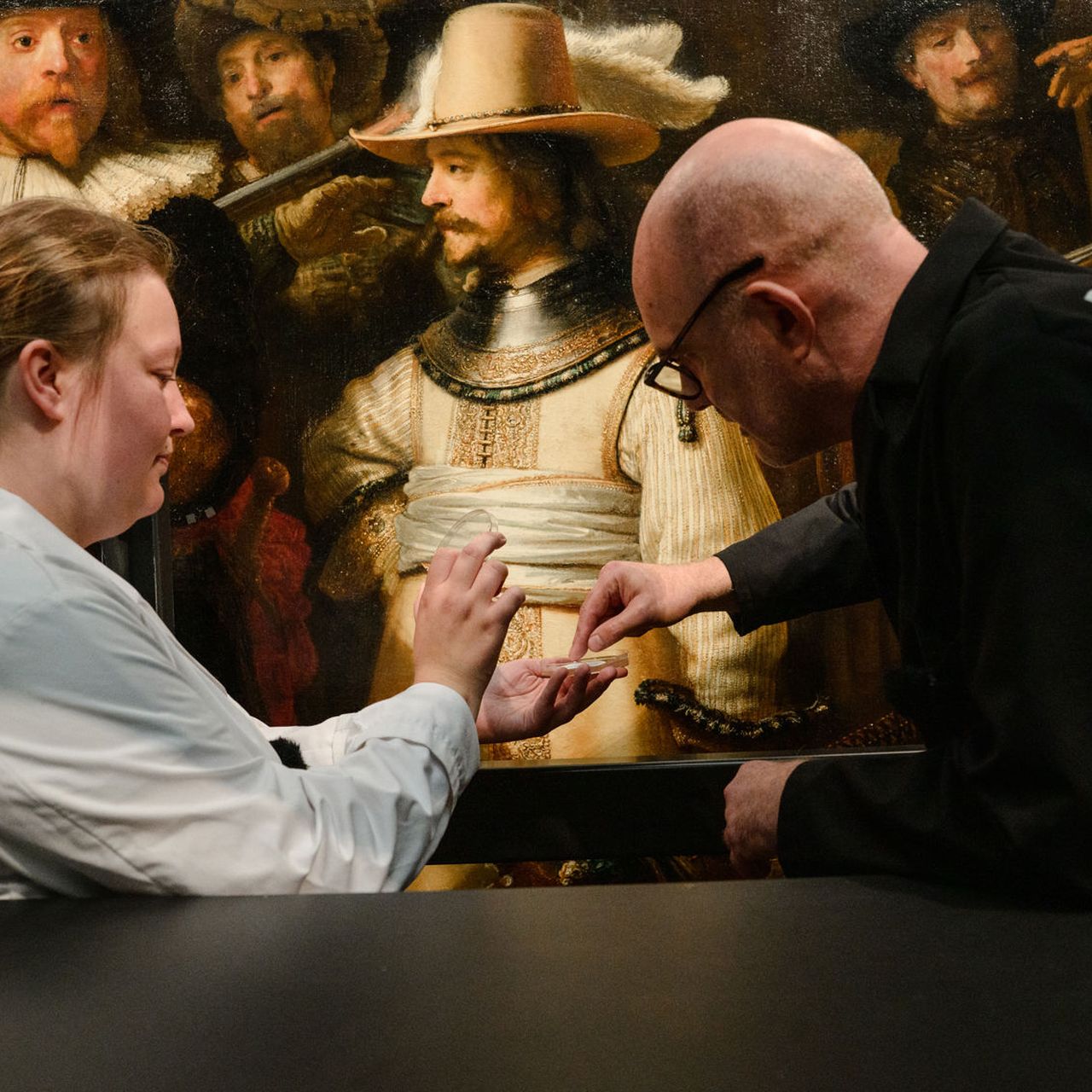
Conservators gently pressed sterile cellulose discs onto both varnished and unvarnished sections of the canvas. This method minimizes physical contact and preserves the painting’s integrity. The discs were transferred to Petri dishes and incubated in ARTIS-Micropia’s lab.
Over days, microbes multiplied into visible colonies. External labs then identified these colonies using advanced techniques. The process is non-invasive and allows detailed study without damage.
What the Microbes Reveal
Some bacteria are familiar. Staphylococcus epidermidis and Micrococcus luteus are common on human skin and help protect it from disease. These species likely come from visitors and staff who have touched the painting over centuries.
Others, like Kocuria palustris and Lysinibacillus sphaericus, are found in soil and plant roots. Kocuria palustris thrives in wetlands and decaying matter. Lysinibacillus sphaericus survives harsh conditions, including heavy metals. Their presence suggests long-term exposure to environmental elements.
While harmless, these microbes reflect centuries of human interaction. The painting’s surface is a living record of who has touched it and how it has been maintained over time.
Why the Discovery Matters
This is the first time any artwork has been studied for its surface microbiome. The research shows that bacteria on art are not random—they reflect human and environmental history.
It helps change how the public sees microbes—from pests to essential, living parts of our world.
Operation Night Watch: A Broader Initiative
Since 2019, the Rijksmuseum has run ‘Operation Night Watch,’ a major research and conservation project. It has already led to key breakthroughs: AI restored the trimmed edges, and X-ray imaging revealed a hidden sketch beneath the paint.
‘Thirty or 40 years ago, nobody could have imagined you’d be talking to a chemist or biologist about The Night Watch,’ said Rijksmuseum director Taco Dibbits. ‘This collaboration between humanities and sciences is helping the project gain wider acceptance.’
The project shows art is not a frozen moment—it evolves through time, touch, and scientific inquiry.
Challenges and Limitations
Scientists cannot determine when any bacteria arrived. While Rembrandt may have touched the painting, centuries of restorations mean current microbes likely come from staff and visitors. As head of science Katrien Keune noted, ‘Ideally, you want the bacteria of Rembrandt: this is the Holy Grail.’ But that’s unlikely.
The presence of Microbacterium saccharophilum remains especially puzzling without a sugar source. Scientists remain cautious about linking it to the painting’s early history.
What to Watch Next
The team has completed only half of its planned sampling trips. All 60 samples are expected by February. As of now, 20 microbial species are on display at ARTIS-Micropia, with 10 more still incubating.
The exhibition, titled ‘The Night Watch Lives’, runs through May 2027. It features a life-size reproduction of the painting, marked with numbered sampling dates. Inside glass-encased Petri dishes, live bacterial colonies grow, showing a visible connection between the painting and microbes.
Visitors often wonder if microbes might date back to Rembrandt. Scientists say such a link is improbable. Still, the project helps shift public views of microbes—showing they are vital, not just dangerous.
For those who see art as a frozen moment, this research offers a new truth: art breathes, and so does the world it represents.
Sources & further reading
Featured image: original publisher image. Via original publisher. Image source