Foreign Affairs
Washington should pursue a limited nuclear agreement where possible, while reducing its military exposure in the Middle East.
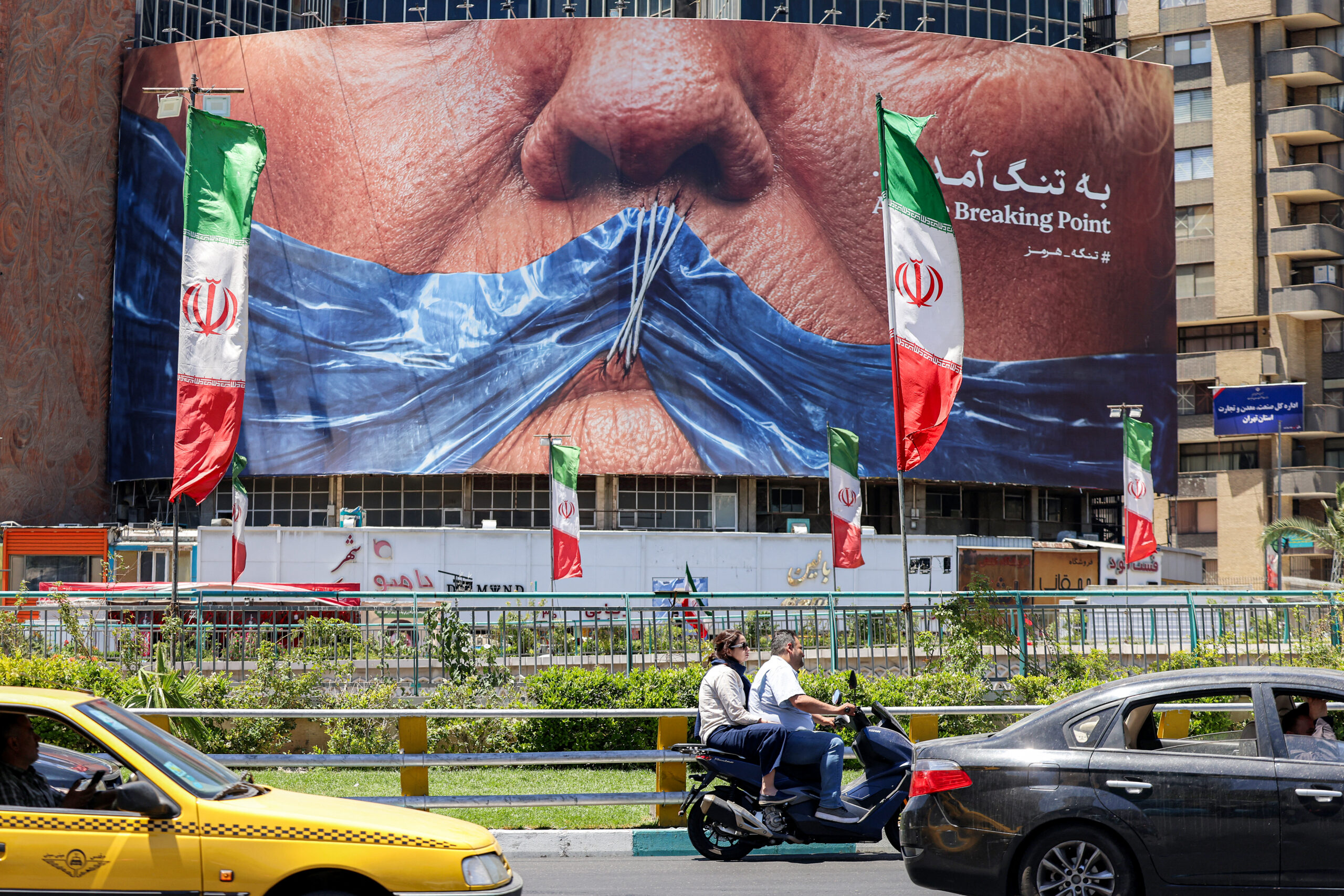
(Photo by ATTA KENARE / AFP via Getty Images) /
The signing of the memorandum of understanding (MOU) between the United States and Iran has opened the possibility for a new trajectory in one of Washington’s most intractable relationships. Although the deal is tenuous, the Trump administration has signaled a willingness to quickly change its approach after failing to achieve its objectives in a costly war. Already, the United States has granted waivers for Iran to sell its oil into the global market and signaled some willingness to move away from the maximalist demands that contributed to the crisis—though given the recent strikes, how durable that movement will be is an open question. But what might the U.S. relationship with Iran look like by the end of Donald Trump’s presidency?
There are three scenarios worth considering. Each considers three key variables: the status of Iran’s nuclear program, Iran’s economic condition, and the U.S. military footprint in the Middle East. Taken as a whole, these scenarios are intended not to be predictions but instead serve as models to consider what direction the relationship may head in, and the implications of the policies chosen today.
The most likely scenario is a return to something resembling the status quo ante. This consists of the United States and Israel periodically carrying out strikes against Iran’s nuclear (and possibly missile production) facilities, sustained sanctions that curb Iran’s growth, and a robust U.S. military posture in the region, with more troops regularly deployed for ongoing operations than before the war. Under a “mowing the grass” approach, the nuclear issue is not permanently resolved, and the United States remains entrenched in the Middle East. While it’s worth acknowledging this real possibility, it is an undesirable outcome and not one that we will dwell on.
Two alternative, non-maximalist paths are available. One is a limited diplomatic deal that curtails Iran’s nuclear program without requiring Tehran’s capitulation. We call this “the charm offensive.” The other involves a declaration of victory by Trump and reduced U.S. exposure in the region, forcing local powers to manage the balance of power without assuming Washington will underwrite every confrontation with Iran (a.k.a. “Time to Get out of Dodge”). Crucially, both recognize that Iranian capitulation is a pipe dream and that another round of fighting will not be worth the cost.
The Charm Offensive
In this scenario, the ceasefire holds, and Iran proves willing to work in good faith toward a lasting agreement.
Iran, having successfully weathered U.S. attacks and imposed costs in return, does have leverage, but it plays its hand carefully and does not antagonize Trump. Instead, it offers Washington a way to claim victory: The war brought Iran back to the table, and now Trump can secure a deal that meaningfully limits Iran’s nuclear program. For its part, Tehran asks for reconstruction funds as part of any deal, which the Trump administration initially delivers on, although it falls on the next president to decide whether it is politically and economically feasible to sustain these payments. With the initial reconstruction funds and sanctions relief, Iran is able to rebuild its infrastructure and begin revitalizing its economy, strengthening it beyond pre-war levels.
The United States does not rush for the exits. While it draws down to pre-war levels, it maintains its bases in the region. Gulf partners express some dismay at American accommodation of Tehran, but the continued U.S. presence reassures them enough to stay quiet. That said, they successfully push for Trump and Congress to allocate billions more to missile and drone defense systems in the region.
Time to Get Out of Dodge
There is another path, one that does not depend on a diplomatic breakthrough on a vexing issue. Here, Trump declares victory and moves on. No lasting agreement comes out of the MOU. Eager to leave the strategic defeat against Iran in the rearview mirror, however, Trump changes the narrative, treating the Iran problem as largely solved and reducing U.S. exposure in the region. While there is no agreement limiting Iran’s nuclear program, a combination of reduced U.S. pressure and Iranian caution dissuades Tehran from racing toward a nuclear weapon, as it has no desire to hand Washington a pretext for another round of strikes. At the end of the Trump administration, Iran has a very short breakout time and the United States has little insight into Iran’s nuclear activities, but Iran has not engaged in saber-rattling and instead is working to manage its shifting position in its neighborhood.
Iran is bolstered economically by being able to charge a fee for ships navigating the Strait of Hormuz, but it does not receive relief from U.S. sanctions, which carry on largely as they had before and during the conflict. Iran seeks greater trade with China, Pakistan, and India, but outside of oil sales, it is unable to develop robust export markets. Iran’s size and resources make it a regional power, but it is not able to economically or militarily dominate the region.
Iran remains a threat in the Middle East, but the Trump administration wants to avoid being sucked back into a conflict; the White House quietly draws down U.S. military presence there to well below pre-war levels. Though the United States maintains a presence in Qatar, the U.S. drawdown spurs Gulf states to become more self-reliant. Moreover, Gulf states take steps toward a regional security architecture while also cautiously pursuing a modus vivendi with Iran, recognizing that Iran is here to stay. The balancing coalition is adequate to prevent Iran from seeking regional domination.
Which Scenario Best Serves the United States?
The worst outcome would be to pretend that the war vindicated the tired maximalist approach to Iran. Maximalism did not work before or during the war. It certainly won’t work now. The MOU, while necessary to halt a mistaken war, represents a strategic defeat for the United States. Returning to “mowing the grass” or “maximum pressure” would be the easiest mistake to make, allowing Washington to avoid hard choices in the short term while locking the United States into a costly cycle. Doing so would solve little—the war has made clear the limits of U.S. power vis-à-vis Iran—would not prevent Iran from obtaining a nuclear weapon over the longer term, would not change Iran’s government, and would cost the United States massively in both dollars and opportunities to shift its resources elsewhere.
Subscribe Today
Get daily emails in your inbox
The Charm Offensive could be the best option for preventing Iran from obtaining a nuclear weapon, but Iran will have reasons to doubt the credibility of the United States, and any agreement will be fragile. If reconstruction payments are halted or a new administration walks away from an agreement, Iran could quickly make progress toward a nuclear weapon. And because Iran would likely emerge in a better economic position and with a stronger sense of its own leverage, the collapse of a deal could leave the United States facing a more capable Iran. That’s all the more reason to prioritize keeping a deal afloat.
If the United States gets out of Dodge, Washington will have reduced leverage in the region, and Iran may come to play a greater role in the Middle East. But the United States can live with that. Most importantly, the United States will have less risk of being pulled back into a war that is not vital to U.S. interests, regardless of what trajectory Iran takes. Freed from the burden of trying to manage an unmanageable region, the United States will be able to redirect resources and attention to more pressing matters—as at least three presidents, Trump included, have wanted to do.
Ideally, the United States would combine elements of both non-maximalist paths, pursuing a limited nuclear agreement where possible, while reducing its military exposure and ambitions in the region regardless. But if the choice is between trying to return to an old, untenable approach and accepting a less dominant but less costly role, the latter better serves U.S. interests.