On Wednesday night, Donald Trump and Barack Obama held campaign rallies ahead of the U.S. midterms. The events in Ohio and Georgia marked a rare public clash between the two former presidents, showing how personal and emotional rhetoric has become central to political messaging. Source: independent.co.uk.
Trump’s Rally in Ohio: Husted and Epstein
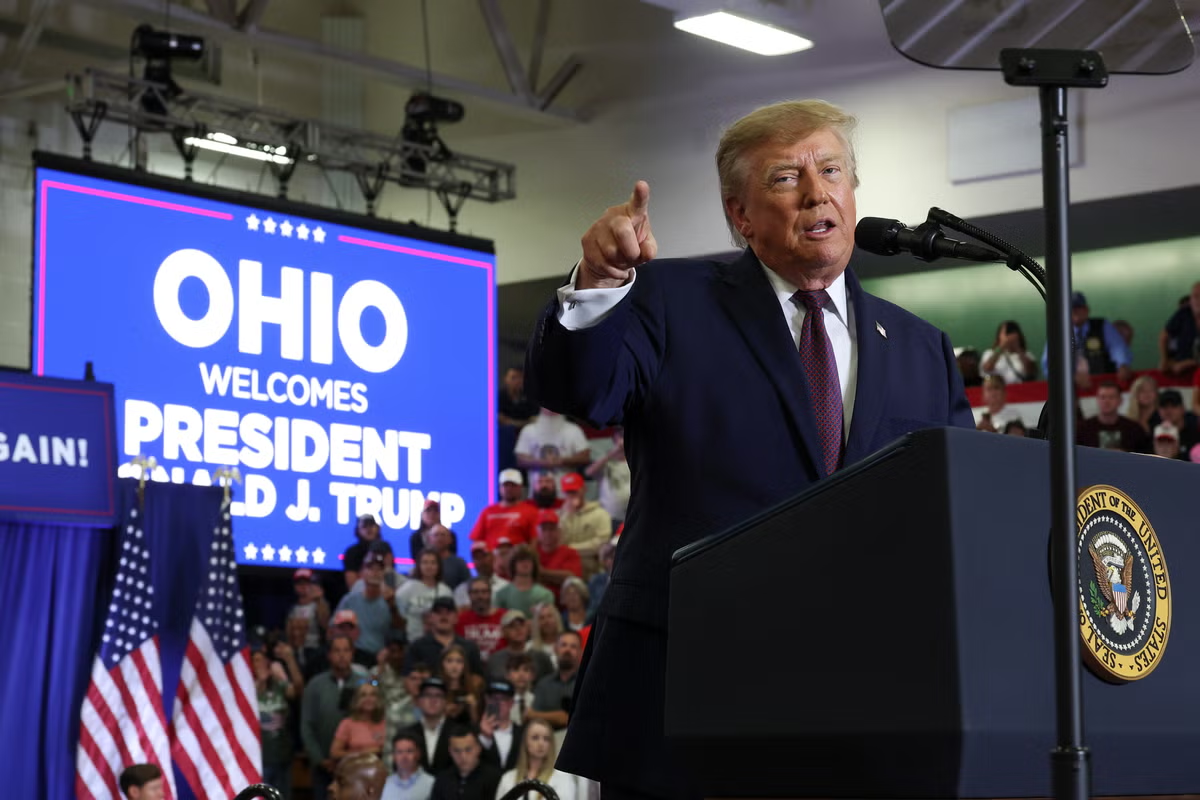
Trump visited Ohio for the third time to support Republican Senator Jon Husted. The rally began with him praising Husted’s physical appearance—a pattern common in Trump’s speeches.
During the event, a protester interrupted the speech by mentioning Jeffrey Epstein. Epstein was a convicted sex offender who once shared social circles with Trump.
Trump responded: ‘I threw Epstein out of a club like 20 years ago because I thought he was a wackjob.’
This comment drew attention, especially given past scrutiny of Trump’s administration over government files related to Epstein’s case.
Trump called the heckler a ‘sick, weak person,’ reinforcing his usual stance on crowd disruptions. The rally took place as Husted and Democratic Senator Sherrod Brown are tied in polling. A Suffolk University poll had Brown ahead by three points, 47 to 44. An InsiderAdvantage poll also showed Brown leading Husted by three points, 47 to 44.
The close race shows the Senate race remains competitive. Trump’s presence helps energize Republican voters and shapes the campaign narrative in Ohio.
Obama’s Cheesecake Factory Comment and Reaction
At a rally in Georgia, Obama mocked Trump’s White House renovations, saying: ‘He’s got the White House looking like Saddam Hussein opened a Cheesecake Factory.’
This remark, made during a prior Ohio rally, has become widely shared online.
Obama used the comment to criticize the appearance and tone of Trump’s administration. He suggested the White House reflects a lack of seriousness in public service.
The MAGA base responded with criticism, calling the remark elitist and disconnected from everyday Americans. In Georgia, Obama defended it, saying: ‘This was all crazy. They mobilized a whole government response to that joke — not inflation — but to that joke.’
He clarified the backlash was about tone, not economic issues.
Obama also criticized Trump’s record, calling it a series of ‘bad decisions’ that contributed to national hardship. He pointed to the Iran War as a key example, linking it to current struggles. This aligns with Democratic messaging about Trump’s foreign policy.
Defense Official: U.S. Ready for Military Action in Iran
A defense official told NewsNation that the U.S. is ‘postured to return to military operations in Iran’ after the midterms. However, the official added that a final decision has not been made.
Trump’s administration has made few public statements on Iran. This shift in military readiness may signal a potential change in U.S. strategy. The official’s remarks suggest the administration is preparing for possible escalation in the region.
Mike Johnson Rejects Peaceful Transition of Power
House Speaker Mike Johnson rejected the idea that a peaceful transition of power is necessary after the midterms. During a campaign stop in Orangeburg, New York, a reporter asked if he would commit to a peaceful transfer of power regardless of results.
Johnson responded: ‘It’s a little silly you have to ask the question. Of course we’ll have a peaceful transfer of power, but it will not be transferring, because we are going to keep the majority, and I’m going to be the Speaker of the House, and I will keep steady hands at the wheel.’
Johnson previously supported claims that the 2020 election was fraudulent and defended January 6 rioters. His comments reflect a broader Republican emphasis on maintaining power, even if elections change hands.
Why These Rallies Matter
The rallies show a deepening divide between the two former presidents. Trump uses personal references to energize his base. Obama uses satire to position Democrats as more responsible.
These moments reflect a broader trend: political discourse is increasingly personal. Public figures rely on emotional appeals and controversial references to build support.
While the midterms are still weeks away, the tone of these events shows how emotionally charged the campaign atmosphere has become. Public reactions vary—some see the remarks as bold statements, others as inappropriate.
There is no evidence these remarks directly affected voter behavior or polling. But they show how intense the campaign environment has grown.
Limitations and Open Questions
There is no official confirmation that the U.S. will launch military operations in Iran. The defense official’s statement is a preliminary assessment.
Trump’s comment about Epstein is anecdotal and lacks official verification. No records confirm he threw Epstein out of a club.
Obama’s Cheesecake Factory remark is widely shared but not supported by official statements. The government’s response to the joke remains unclear.
Public reactions to these remarks vary. While some view them as bold, others see them as tone-deaf. There is no evidence they influenced voter behavior or polling trends.
Observers will watch how these exchanges unfold. The midterms will be closely watched for shifts in public sentiment. How campaigns respond to these moments could shape the tone of the election. Military developments in Iran will also be critical, as they may signal a shift in U.S. foreign policy.
Sources & further reading
Featured image: original publisher image. Via original publisher. Image source