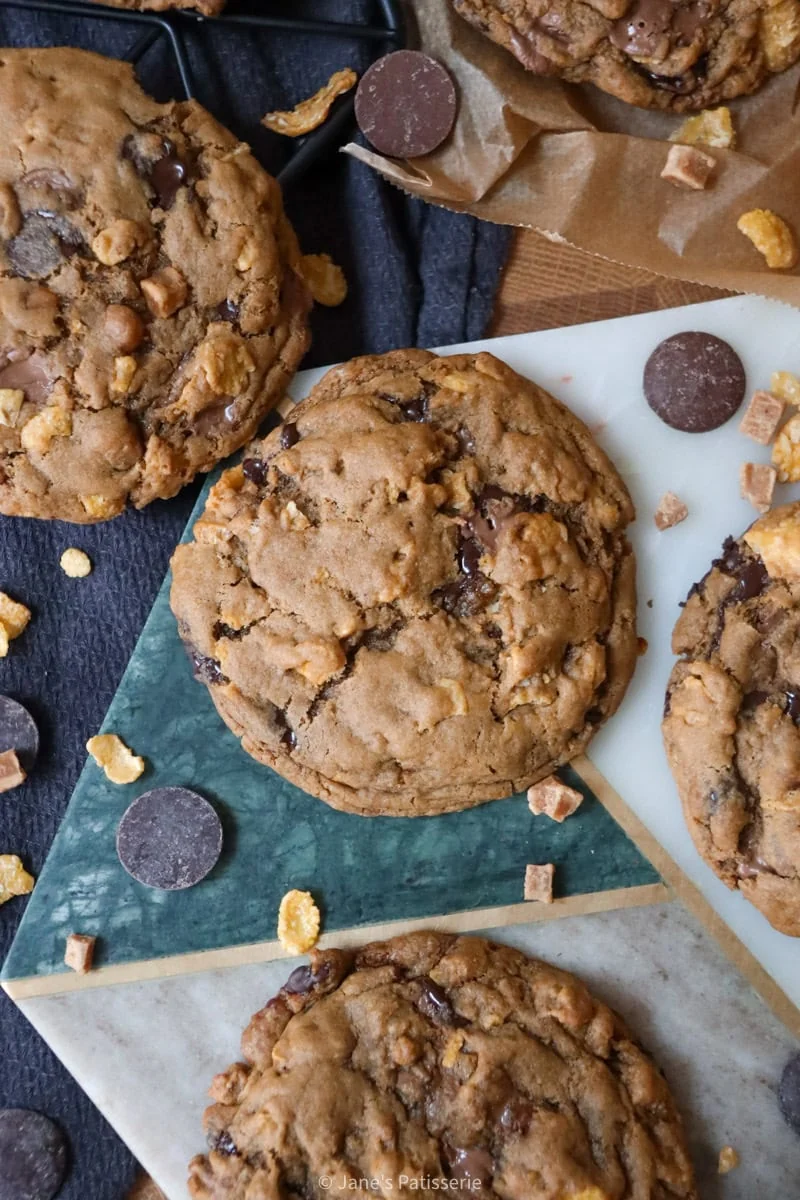
Chocolate cornflake cookies combine rich chocolate, deep caramel, and crisp cornflakes into a thick, chewy, and crunchy treat. They are ideal for autumn and holiday baking, offering a satisfying balance of textures and flavors. Source: janespatisserie.com.
What Makes These Cookies Special?
These cookies stand out for their layered texture and bold flavor profile. The dough is rich with milk and dark chocolate, caramel, and cornflakes, delivering a mix of sweetness, depth, and crunch. The combination of ingredients creates a sensory experience that mimics traditional bakery-style cookies, with each bite offering a distinct interplay of softness and crispness.
According to the creator, Jane’s Patisserie, the combination of chocolate, caramel, and cornflakes provides a balanced sweetness, crunch, and depth of flavor. This trio is not only delicious but also evokes a nostalgic, bakery-style feel—something many associate with classic holiday treats. The inclusion of black treacle adds a distinctive caramel depth without making the cookies overly sweet. This ingredient, a traditional British component, contributes both a rich, molasses-like flavor and a deeper color, enhancing both the visual appeal and the overall sensory experience of the cookies.
Key Ingredients and Their Roles
- Butter: The recipe calls for unsalted butter at room temperature, which blends smoothly with other ingredients. When using a baking spread, it must be chilled from the fridge to achieve the right consistency. This ensures a uniform texture and prevents the dough from becoming too stiff or greasy.
- Dark brown soft sugar: This ingredient provides a deeper, more complex flavor. The molasses content in dark brown sugar adds a subtle bitterness that balances the sweetness of the chocolate and caramel. While the original recipe uses all dark brown soft sugar, the creator notes that a blend of dark and light brown soft sugar—half and half—can be used for a milder taste, or all light brown sugar for a lighter profile.
- Black treacle: It contributes a rich, caramel-like depth to the flavor. The creator mentions that this ingredient gives the cookies a deeper color and a more robust flavor without increasing sweetness. If black treacle is not available or preferred, the recipe can be adjusted by omitting it and using 125g of butter instead, maintaining fat content while removing the unique flavor dimension.
- Egg and vanilla extract: The egg acts as a binder, helping to hold the ingredients together. A medium egg is standard, though a large egg can be used for a slightly richer, more moist texture. The addition of a good quality vanilla extract, as noted by the creator, enhances the overall flavor, adding a warm, aromatic note that complements the chocolate and caramel.
- Plain flour: This flour is used to control the amount of leavening agents in the recipe. The combination of baking powder and bicarbonate of soda is essential for achieving the right texture—light, airy, yet still chewy. The creator emphasizes that these leavening agents do not easily swap, as their interaction produces a balanced rise without over-expansion.
- Chocolates: The base recipe uses a mix of milk and dark chocolate chunks. Milk chocolate adds a creamy, smooth element, while dark chocolate brings complexity and a bittersweet note. The creator notes that chocolate chips, buttons, or even white chocolate can be substituted, depending on preference.
- Caramel chunks: Available in the bake aisle of supermarkets, these chunks offer a concentrated, rich flavor that melts slightly during baking, releasing a deep, sticky sweetness. The creator suggests that homemade toffee can be used as a swap, providing a similar depth of flavor.
- Cornflakes: These provide a crisp, crunchy texture. The creator recommends using a fresh packet, as cornflakes can become stale quickly. Honey nut or Frosties are suggested as alternatives for those who prefer a sweeter flavor. The creator notes that cornflakes soften slightly during baking, and this softening is intentional—contributing to the overall chewy mouthfeel of the cookie.
How to Make the Cookies
- Preheat the oven to 190°C (170°C fan). Line two trays with parchment paper to prevent sticking and ensure even baking.
- Beat the butter and sugar together until creamy. This step ensures the fat and sugar are fully incorporated, creating a smooth base for the dough.
- Add the treacle, egg, and vanilla extract. Mix until combined. This gradual addition helps develop the flavor and binds the mixture.
- Add the plain flour, baking powder, bicarbonate of soda, and sea salt. Mix briefly to combine. Overmixing at this stage can lead to a tough texture, so gentle mixing is essential.
- Stir in the chocolate, caramel, and cornflakes. Mix gently to avoid overworking. This step introduces the key flavor components and ensures even distribution throughout the dough.
- Divide the mixture into 8 portions, each weighing about 120g. This ensures consistent size and even baking.
- Place four portions per tray. Spread evenly to allow for uniform browning and texture development.
- Bake for 12 to 14 minutes. The cookies will have a golden-brown surface and a soft, slightly springy center.
- Allow to cool for 30 minutes before serving. This cooling period allows the cookies to set and the flavors to meld, resulting in a more cohesive and enjoyable eating experience.
Customization and Variations
This adjustment enhances the rise and creates a lighter, more delicate texture. Additionally, chilling the portions for at least one hour before baking helps the dough firm up, resulting in a more structured cookie with better shape retention.
For oven temperature adjustments, bake at 200°C in a conventional oven or 180°C in a fan-assisted oven. These settings help achieve a more even bake and prevent the edges from browning too quickly.
To preserve cornflake crunch, two optional methods are available:
- Preheat the oven to 160°C. Spread cornflakes on parchment and bake for 10 minutes, stirring often for even browning. This method results in slightly toasted, golden cornflakes that retain more crunch.
- Melt 15g of butter and 10g of golden syrup. Toss cornflakes in the mixture, then bake for 10 minutes. This method adds a subtle sweetness and a golden sheen to the cornflakes, while still preserving their structural integrity.
The creator notes that these methods are optional. Cornflakes will soften slightly during baking, and this softening is part of the intended texture. The balance between crispness and chewiness is intentional and contributes to the overall appeal of the cookies.
Storage and Shelf Life
These cookies are best enjoyed warm but can be stored at room temperature for 3 to 4 days. Store in an airtight container with parchment paper between layers to prevent sticking and maintain freshness.
Freezing is effective: baked cookies can be frozen for up to three months. To freeze, allow them to cool fully, then place flat on a tray before transferring to a container. This method prevents the cookies from sticking together and ensures even thawing.
Raw dough can also be frozen. When baking from frozen, add 1 to 2 minutes to the baking time. This adjustment compensates for the slower heat transfer in frozen dough, ensuring even cooking and a properly baked texture.
Why This Recipe Matters
It offers a simple, accessible way to create a bakery-style cookie without needing chilling or special equipment. The recipe is designed for home bakers with minimal adjustments, making it ideal for both beginners and experienced cooks.
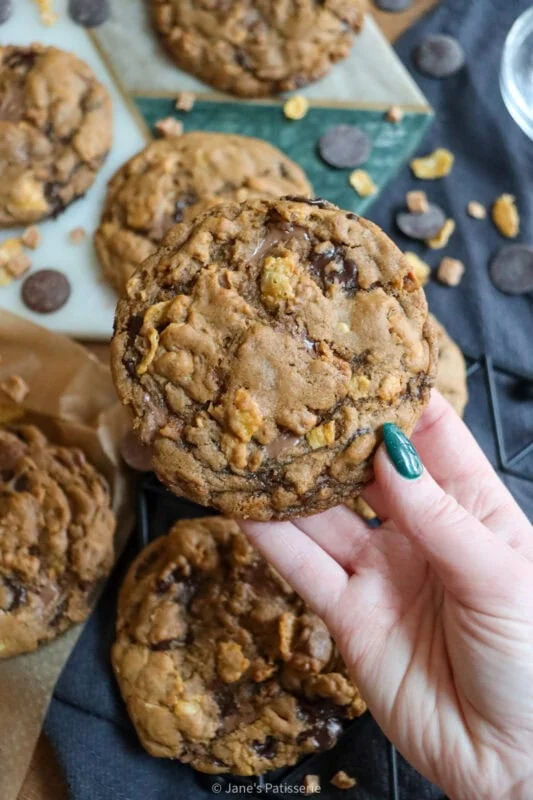
Its texture—thick, chewy, and crunchy—mimics traditional bakery cookies. The balance of chocolate, caramel, and cornflakes makes it both nostalgic and satisfying, evoking memories of classic holiday treats.
Limitations and Considerations
The recipe does not guarantee consistent results. Cornflakes may become stale quickly, so freshness is important. Using a fresh packet ensures optimal texture and flavor.
While the recipe is flexible, swapping ingredients may affect texture. For example, omitting treacle or changing chocolate types may alter flavor depth. The use of butter, eggs, and flour means it may not suit those with allergies to these ingredients.
What to Watch Next
As holiday baking grows in popularity, recipes like these may become more common in home kitchens. The influence of UK-inspired baking styles—such as those from Marks & Spencer—may continue to inspire global home bakers.
For those who enjoy similar flavors, a related recipe is available: Chocolate Peppermint Cookies.
The original recipe comes from Jane’s Patisserie, a personal blog dedicated to baking.
Sources & further reading
Featured image: original publisher image. Via original publisher. Image source