
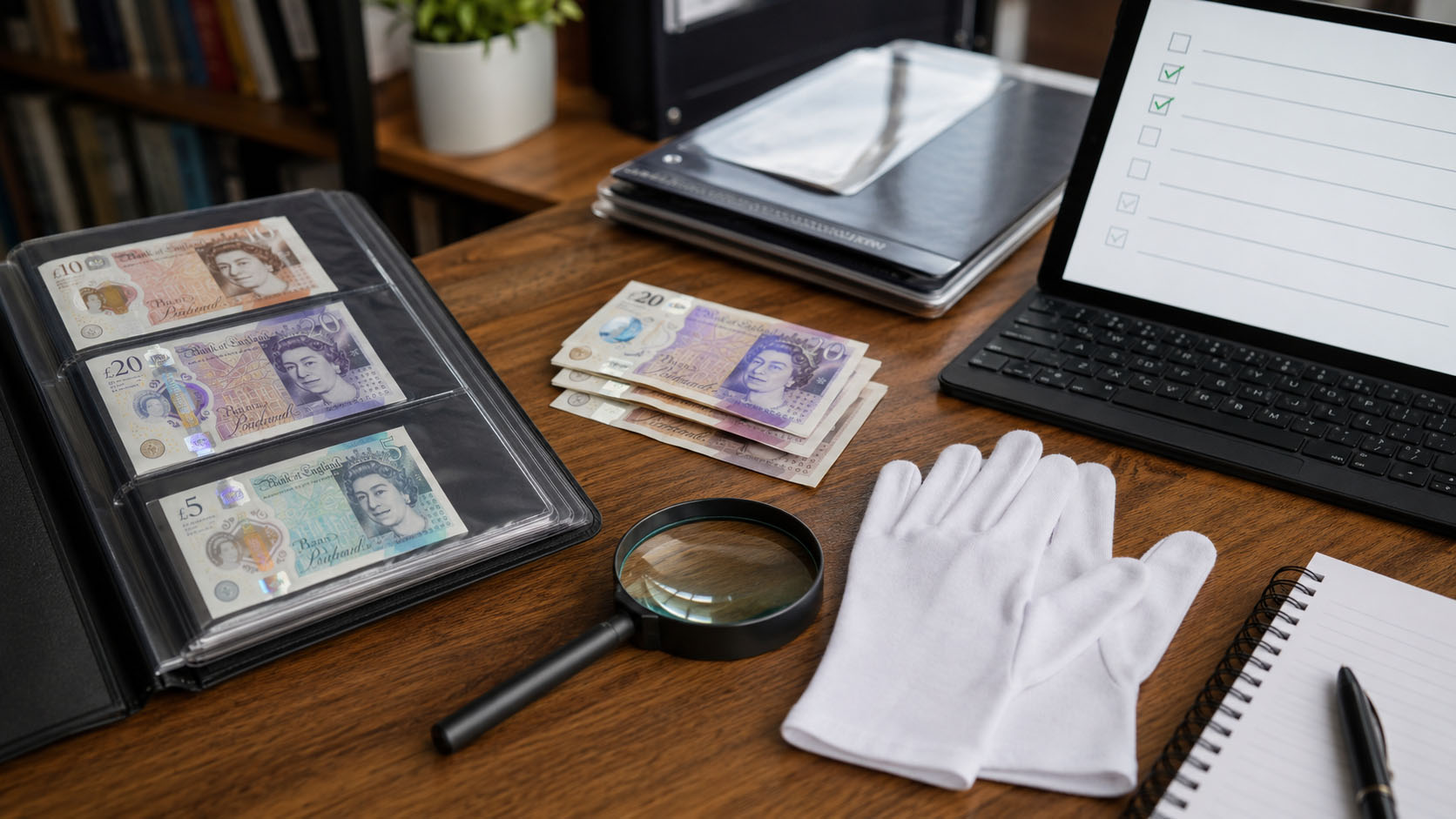
Many people look at a £5, £10, £20 or £50 note and only see its face value. Collectors look more closely. For them, the important detail is often not the amount printed on the note, but the serial number.
Some UK banknotes can attract interest above face value when they have rare, low, meaningful or unusual serial numbers. This does not mean every note with an interesting number is valuable, and it does not mean a bank will pay more than the printed value. A banknote is still legal money at its face value. However, in the collector market, certain serial numbers can make a normal-looking note more desirable.
This guide explains what to check on Bank of England £5, £10, £20 and £50 notes, which serial numbers collectors usually look for, and how to avoid common mistakes when trying to value a note.
What Is a Banknote Serial Number?
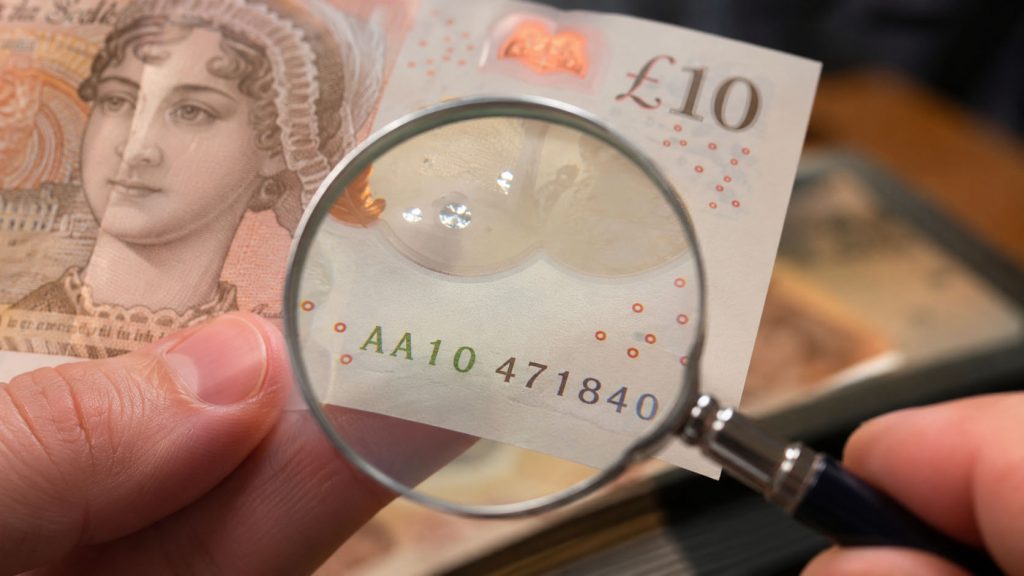
Every Bank of England note has a serial number. This is the code printed on the note that helps identify it.
A typical serial number has two parts:
- a four-character prefix or cypher, such as AA01
- a six-digit number, such as 123456
So a full serial number may look like this:
AA01 123456
Collectors often look at both parts. The prefix can show whether the note is from an early production run, while the six-digit number can show whether the note is especially low, patterned or meaningful.
Are Rare Banknotes Really Worth More Than Face Value?
Yes, some are — but only in the collector market.
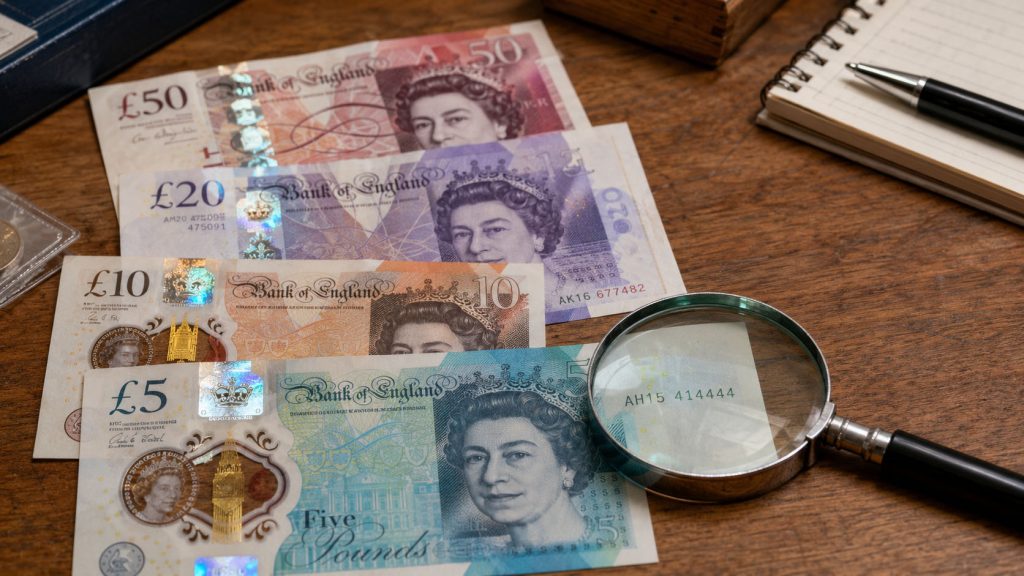
The Bank of England treats its issued banknotes as worth their printed face value. A £5 note is worth £5 to the Bank, a £10 note is worth £10, and so on. The extra value comes from private collectors, dealers or auction buyers who want a particular serial number, condition or historical issue.
This means a note can be worth more than face value only if someone is willing to buy it for more.
Condition also matters. A clean, uncirculated note usually has better collector appeal than one that is folded, torn, written on, stained or heavily used.
Which UK Banknotes Should You Check?
You should check all current Bank of England polymer notes:
- £5 note — Winston Churchill design
- £10 note — Jane Austen design
- £20 note — JMW Turner design
- £50 note — Alan Turing design
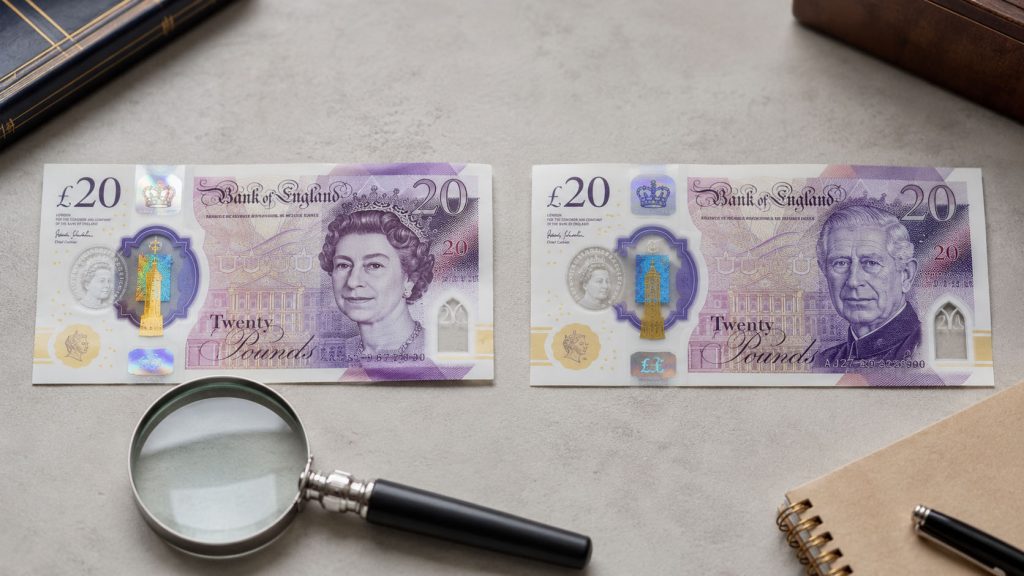
There are currently two portrait versions in circulation: Queen Elizabeth II and King Charles III. Both versions can be used, and both can be checked for collectible serial numbers.
King Charles III notes are especially interesting to some collectors because they represent a major change in UK banknotes: the first Bank of England notes with King Charles III’s portrait entered circulation on 5 June 2024.
The Most Important Serial Numbers to Look For
1. Very Low Serial Numbers
The most desirable numbers are usually the lowest numbers, especially:
000001
000002
000003
000004
000005
000006
000007
000008
000009
000010
In general, the lower the number, the more interesting it may be to collectors.
A note with a serial such as AA01 000007, CA01 000008 or HB01 000010 is much more likely to attract attention than a note with an ordinary number such as 382946.
However, very low numbers are often kept back, donated, auctioned or collected early. Finding one in everyday change is possible but uncommon.
2. First Prefix Notes
Collectors often look for early prefixes. For Queen Elizabeth II polymer notes, many collectors focus on AA01 notes because AA is associated with the first production sequence.
Examples:
AA01 000123
AA01 001945
AA01 123456
For King Charles III banknotes, collectors commonly look for first-run style prefixes, especially:
£5 — CA01
£10 — HB01
£20 — EH01
£50 — AJ01
A King Charles III note with one of these prefixes and a low number may be more interesting than a later ordinary serial number.
Rare Serial Numbers by Denomination
Rare £5 Note Serial Numbers
For £5 notes, check the serial number carefully, especially if the note has:
- AA01 prefix on a Queen Elizabeth II polymer note
- CA01 prefix on a King Charles III note
- a very low final number, such as 000001 to 000100
- a memorable number connected with Winston Churchill
- a repeated or patterned number
Examples to check:
AA01 000010
AA01 001945
CA01 000050
CA01 111111
CA01 123456
The number 1945 may attract interest because Winston Churchill is strongly associated with the Second World War period, and the Churchill £5 note itself makes that date more relevant to collectors.
Rare £10 Note Serial Numbers
For £10 notes, collectors may look for:
- AA01 Queen Elizabeth II polymer notes
- HB01 King Charles III notes
- low numbers
- Jane Austen-related dates
- repeated numbers or ladder sequences
Examples to check:
AA01 000010
AA01 001817
HB01 000002
HB01 000100
HB01 777777
Jane Austen-related dates may attract interest because the £10 note features Jane Austen. For example, 1817 is connected with the year of her death and burial.
A strong real-world example of collector demand came from the King Charles III banknote charity auctions, where a low-serial £10 note with serial number HB01 00002 sold for a very high auction price. This does not mean every HB01 note is valuable, but it shows why collectors pay attention to the prefix and final number.
Rare £20 Note Serial Numbers
For £20 notes, check for:
- AA01 Queen Elizabeth II polymer notes
- EH01 King Charles III notes
- low serial numbers
- JMW Turner-related dates
- artistic or historical number patterns
Examples to check:
AA01 000005
AA01 001839
EH01 000020
EH01 000100
EH01 654321
The £20 note features artist JMW Turner, so numbers connected to Turner, his work or important dates may be more attractive to specialist collectors.
Low serial numbers are still the strongest category. A note with 000005 is usually more interesting than a note with a random ordinary number.
Rare £50 Note Serial Numbers
For £50 notes, check for:
- AA01 Queen Elizabeth II polymer notes
- AJ01 King Charles III notes
- very low numbers
- Alan Turing-related dates
- computer science or code-themed number patterns
Examples to check:
AA01 000010
AJ01 000003
AJ01 000100
AJ01 230612
AJ01 111111
The £50 note features Alan Turing, so some collectors may be interested in numbers connected with his life, mathematics, computing or wartime codebreaking.
Because £50 notes are less commonly handled by many people than £5, £10 or £20 notes, some people forget to check them. However, low-serial £50 notes can be very attractive to collectors, especially if they are in excellent condition.
Patterned Serial Numbers Collectors Like
Not every valuable serial number has to be extremely low. Some collectors also like patterns.
Repeating Numbers
Examples:
111111
222222
333333
444444
555555
666666
777777
888888
999999
These are easy to remember and visually strong.
Ladder Numbers
Examples:
123456
654321
These are known as ladder numbers because the digits rise or fall in order.
Radar or Mirror Numbers
Examples:
123321
456654
789987
These read in a mirrored way and may attract novelty interest.
Birthday or Year Numbers
Examples:
001975
001966
002000
230612
Some collectors look for dates connected to famous people, historical events or personal birthdays. These can be interesting, but they are usually less valuable than very low serial numbers.
Matching Sets
A matching set is when several banknotes have the same final serial number.
Example:
£5 CA01 002345
£10 HB01 002345
£20 EH01 002345
£50 AJ01 002345
Matching sets can be more collectible than single notes because they are harder to assemble.
What Makes a Banknote More Valuable?
Several factors influence collector value:
1. Serial Number
Low numbers, first prefixes and strong patterns are usually the most important.
2. Condition
Uncirculated notes are more desirable. Folds, tears, stains and writing reduce appeal.
3. Denomination
Higher denominations can attract stronger auction interest, especially when the serial is very low or part of a rare set.
4. Historical Importance
New monarch issues, first-series notes and notes connected with famous British figures may be more collectible.
5. Real Demand
A note is only worth what a buyer is prepared to pay. Asking prices online are not the same as sold prices.
Common Mistakes People Make
Mistake 1: Believing Every AA01 Note Is Rare
AA01 is collectible, but not every AA01 note is worth a fortune. The final six digits, condition and actual buyer demand matter.
Mistake 2: Trusting Unrealistic Online Listings
Some sellers list ordinary notes for hundreds or thousands of pounds. That does not mean the note has sold for that amount.
Always check completed or sold listings, not just asking prices.
Mistake 3: Spending a Rare Note Accidentally
If you find a note with a low number, unusual pattern or first prefix, do not spend it immediately. Put it somewhere safe and research it first.
Mistake 4: Folding or Damaging the Note
Condition affects value. Keep the note flat, clean and dry. Avoid taping it, writing on it or placing it loose in a pocket.
How to Check Your Notes Step by Step
- Look at the serial number on the front of the note.
- Write down the full code, including the prefix and six-digit number.
- Check whether the prefix is early, such as AA01, CA01, HB01, EH01 or AJ01.
- Check whether the final six digits are very low.
- Look for patterns such as 111111, 123456 or 654321.
- Check the condition of the note.
- Compare with sold prices from reputable auction houses or completed marketplace listings.
- Consider a specialist banknote dealer or auction house if the note appears genuinely rare.
Should You Sell a Rare Banknote?
If the note has a very low serial number, first prefix or strong pattern, it may be worth getting a second opinion before selling.
For ordinary interesting notes, online marketplaces may be enough. For very low serial numbers, rare sets or historically important notes, a specialist auction house or banknote dealer may be safer.
Always remember: a banknote is not automatically valuable because someone online says it is. The real value depends on verified sales, collector demand and condition.
Quick Checklist: Numbers Worth Looking For
Check your £5, £10, £20 and £50 notes for:
- AA01 prefix
- CA01, HB01, EH01 or AJ01 King Charles III prefixes
- 000001 to 000100
- 000007
- 000010
- 111111
- 222222
- 333333
- 777777
- 888888
- 999999
- 123456
- 654321
- famous years such as 1817, 1839, 1945 or 1975
- matching final numbers across different denominations
Final Thoughts
Rare UK banknote serial numbers are easy to miss. A normal-looking £5, £10, £20 or £50 note could be more interesting to collectors if it has the right prefix, a very low number or a memorable pattern.
The most important notes to check are first-prefix notes, very low serial numbers and clean uncirculated examples. King Charles III banknotes have added new interest to the collector market, especially for people looking for early serial numbers from the first issue period.
Before spending your next note, take a few seconds to check the serial number. Most notes will only be worth face value, but occasionally, the small code printed on the front can make a big difference.
Banknote value | Queen Elizabeth II polymer notes — check for | King Charles III polymer notes — check for |
|---|---|---|
| £5 note | • AA01 prefix• a very low final number, such as 000001 to 000100• a memorable number connected with Winston Churchill• repeated numbers, such as 111111, 777777, 888888 or 999999• patterned numbers, such as 123456, 654321 or mirror-style numbers | • CA01 prefix• a very low final number, such as 000001 to 000100• a memorable number connected with Winston Churchill• repeated numbers, such as 111111, 777777, 888888 or 999999• patterned numbers, such as 123456, 654321 or mirror-style numbers |
| £10 note | • AA01 prefix• a very low final number, such as 000001 to 000100• a memorable number connected with Jane Austen• repeated numbers, such as 111111, 777777, 888888 or 999999• patterned numbers, such as 123456, 654321 or mirror-style numbers | • HB01 prefix• a very low final number, such as 000001 to 000100• a memorable number connected with Jane Austen• repeated numbers, such as 111111, 777777, 888888 or 999999• patterned numbers, such as 123456, 654321 or mirror-style numbers |
| £20 note | • AA01 prefix• a very low final number, such as 000001 to 000100• a memorable number connected with JMW Turner• repeated numbers, such as 111111, 777777, 888888 or 999999• patterned numbers, such as 123456, 654321 or mirror-style numbers | • EH01 prefix• a very low final number, such as 000001 to 000100• a memorable number connected with JMW Turner• repeated numbers, such as 111111, 777777, 888888 or 999999• patterned numbers, such as 123456, 654321 or mirror-style numbers |
| £50 note | • AA01 prefix• a very low final number, such as 000001 to 000100• a memorable number connected with Alan Turing• repeated numbers, such as 111111, 777777, 888888 or 999999• patterned numbers, such as 123456, 654321 or mirror-style numbers | • AJ01 prefix• a very low final number, such as 000001 to 000100• a memorable number connected with Alan Turing• repeated numbers, such as 111111, 777777, 888888 or 999999• patterned numbers, such as 123456, 654321 or mirror-style numbers |
Important: A rare-looking serial number does not automatically mean the banknote is valuable. The Bank of England treats issued notes at face value only, but collectors may pay more for low serial numbers, first-prefix notes, matching sets, unusual patterns or notes in excellent condition.
FAQ
Are rare banknotes worth more than face value?
Some banknotes can sell for more than face value to collectors, but banks still treat them at their printed value.
What is the best serial number to find?
The best serial numbers are usually extremely low numbers such as 000001, 000002 or 000003, especially with an early prefix.
Is every AA01 note valuable?
No. AA01 notes can be collectible, but condition and the final six-digit number are very important.
Which King Charles III banknotes should I check?
Check £5, £10, £20 and £50 notes with early prefixes, especially CA01, HB01, EH01 and AJ01, plus very low final numbers.
Are repeated numbers valuable?
They can be collectible. Numbers such as 111111, 777777, 888888 and 999999 are more interesting than random serial numbers.
Where can I sell a rare banknote?
You can compare sold prices online, speak with a specialist banknote dealer, or contact an auction house if the note appears especially rare.
Should I clean or press a banknote before selling it?
No. Do not clean, iron, tape or alter the note. Store it flat and safely.
