President Donald Trump has announced he will stop using US taxpayer funds to pay for television ads promoting his policies and persona.
What Happened
Over recent weeks, more than a dozen ads aired, praising Trump and his agenda. These included references to tax cuts, manufacturing, law and order, and a vow to confront what he calls the ‘deep state’ and ‘fake news media’.
In one ad, Trump said: ‘We will cast out the communists, Marxists, and fascists. We will throw off the sick political class that hates our country.’
Trump posted on social media that he would now pay for these ‘Patriotic Ads’ personally and through his MAGA Inc super PAC. He described the ads as ‘a rather standard thing to do’ but acknowledged the backlash.
Key Facts
- The ads were promoted with language indicating they were ‘paid for by the U.S. Government’.
- Trump’s administration has defended the ads as ‘educational’ and ‘public service announcements’.
- Legal experts say such spending violates US laws banning government funds from being used for political advertising.
- Democratic Senator Maggie Hassan introduced a Senate measure to block the ads, but it was blocked by a Republican.
- Republican leaders including John Thune and John Kennedy have publicly opposed the use of taxpayer dollars for political ads.
Background: How US Laws Work
US law prohibits the use of federal funds for political advertising. This includes ads that promote a specific candidate or policy.
Historical government ads have typically been tied to public health emergencies or national crises—such as vaccine campaigns or disaster responses—rather than political messaging.
Legal ethics expert Margaret Dylus-Yukins told the BBC: ‘It’s difficult to see what legitimate government purpose is served by spending taxpayer dollars on ads whose only apparent purpose is to promote the president.’
Why It Matters
The issue reflects a broader tension between political messaging and public finance transparency.
As the November midterm elections approach, Democrats are hoping to gain control of Congress. Midterms often reflect public sentiment toward the president, and Trump’s approval rating has been declining.
Public trust in government spending is a key concern. If officials use taxpayer funds for political promotion, it may erode confidence in the integrity of public finances.
Limitations and Open Questions
The ads are not officially part of a government campaign. They were produced independently and funded through private sources.
Whether the ads violated the law depends on whether the government funds were actually used. The White House has not confirmed that any federal money was spent.
Legal experts remain divided. Some argue the ads crossed a line; others say they fall within the scope of public service messaging.
What to Watch Next
Senate debate on the ad funding issue may continue. The outcome could influence future guidelines on government advertising.
As the 2026 midterms near, public perception of the president and the use of government funds will remain under scrutiny.
For more on US political advertising, see the original BBC report.
Sources & further reading
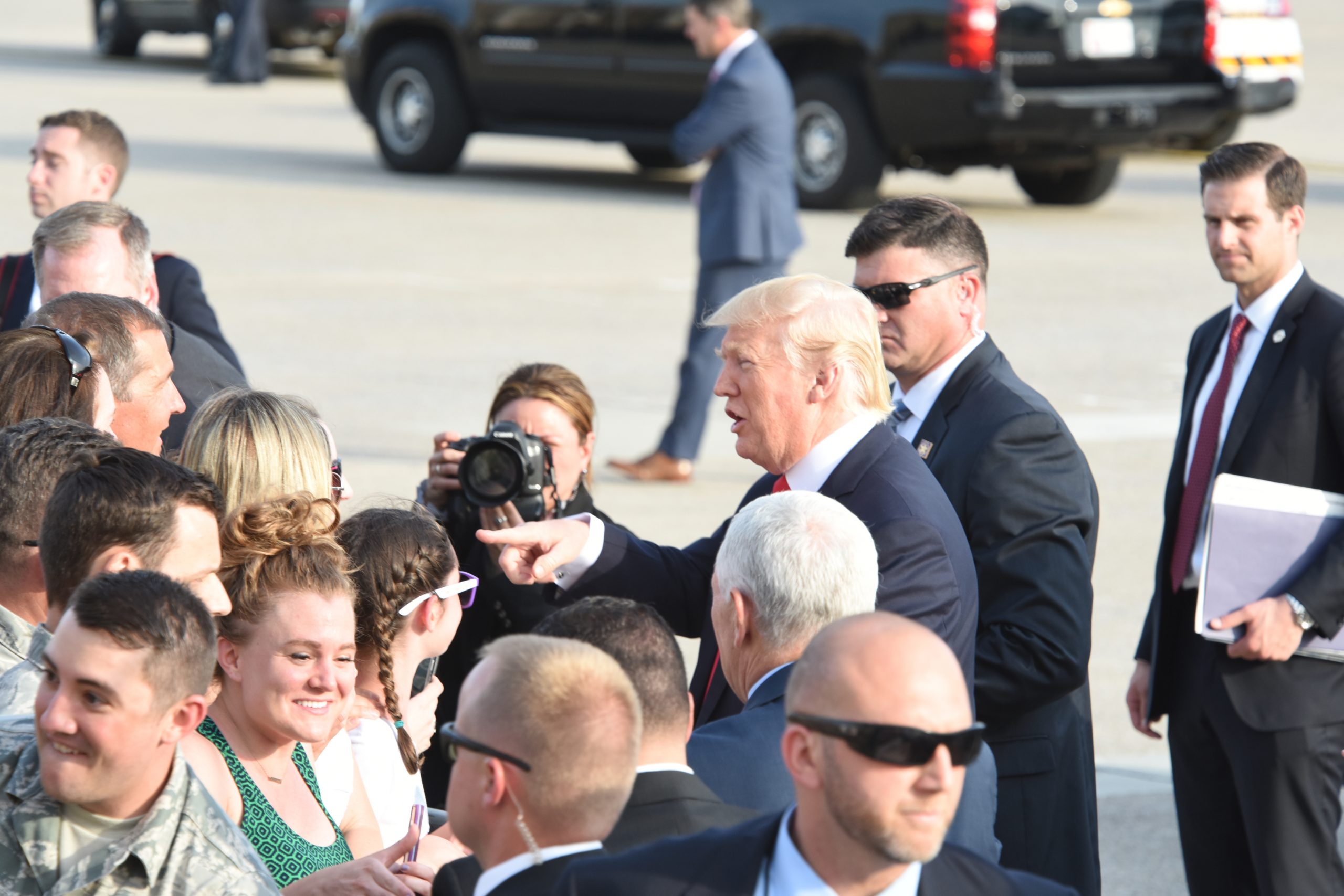
Featured image: President Trump stops by 193rd Special Operations Wing on way… by U.S. Air National Guard Photo by Master Sgt.…, Public domain, via Wikimedia Commons. Image source