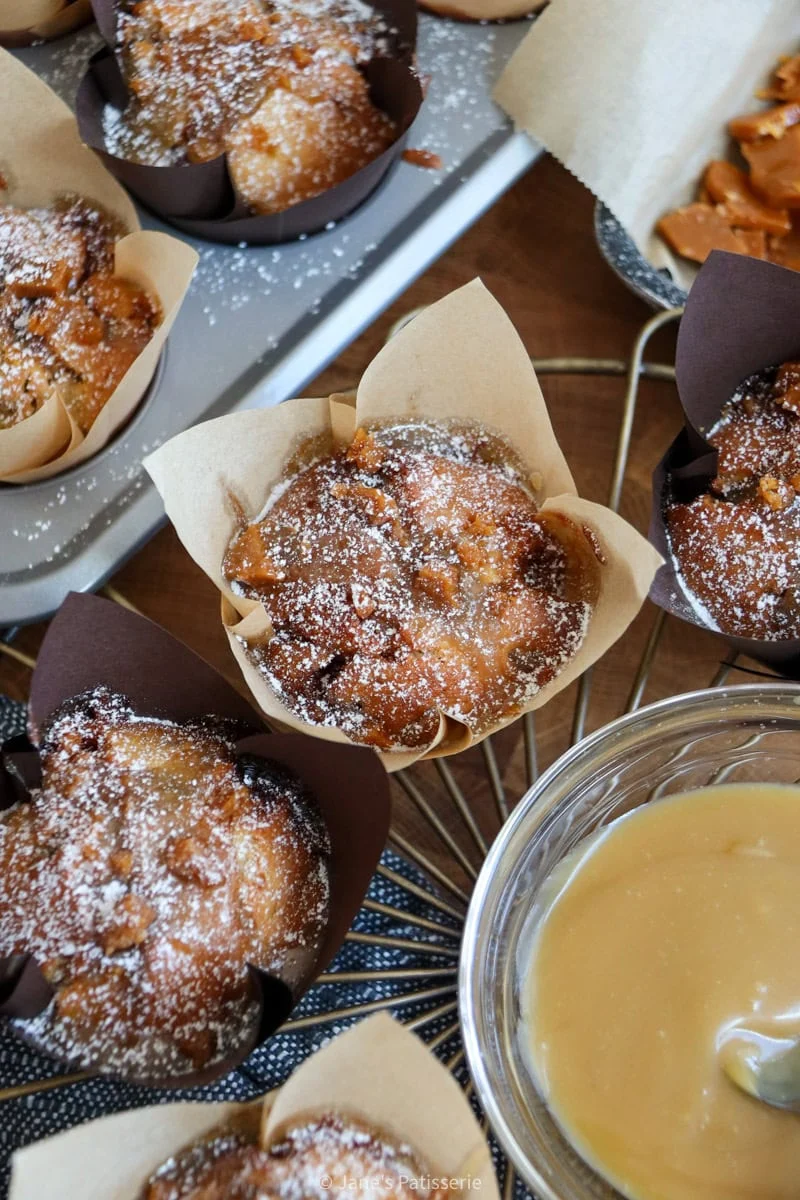
Stuffed Sticky Toffee Muffins are a rich, moist dessert inspired by the classic British sticky toffee pudding. They combine a soft, fluffy muffin base with a gooey toffee sauce center and chopped dates, offering a satisfying texture and deep flavor. Source: janespatisserie.com.
What Makes These Muffins Special?
The recipe is designed to deliver a familiar taste experience with a modern twist. It uses a base muffin mixture that Jane’s Patisserie has refined over years of baking. This base includes melted butter and oil, which provide both flavor and moisture.
The key feature is the stuffed design. The muffins are baked first, then filled with homemade sticky toffee sauce using a piping bag. This method ensures the sauce is evenly distributed and stays gooey without sinking into the base.
According to the source, the sauce is made with double cream, golden syrup, soft sugar, and butter. It is boiled for one minute, then cooled before use. This process balances consistency and prevents over-thickening.
Ingredient Choices and Their Roles
- Butter and oil: A blend of room-temperature butter and a neutral oil (like sunflower or vegetable oil) adds richness and texture. Butter contributes flavor, while oil ensures a smooth, moist crumb.
- Sugar: Light brown soft sugar offers a subtle molasses note. Dark brown soft sugar provides a deeper, more intense flavor, ideal for sticky toffee profiles.
- Eggs: Medium eggs are used for consistent results. Larger eggs can be substituted, though the texture may vary slightly.
- Flour and leavening: Plain flour with baking powder is used. Self-raising flour can replace this, with the baking powder removed.
- Buttermilk: Adds moisture and lightness. It can be made by mixing milk with lemon juice or vinegar and letting it sit before use.
- Vanilla extract: Adds a subtle contrast to the molasses flavor. It is optional but enhances the overall balance.
- Chopped dates: A signature ingredient in sticky toffee desserts. They contribute natural sweetness and chew. They can be omitted and replaced with chocolate, such as white chocolate.
- Hard toffee pieces: These melt slightly during baking and firm up as the muffins cool. Small pieces distribute more evenly and reduce the chance of sinking. Fudge or chocolate chips can be used as substitutes.
How the Muffins Are Prepared
The muffin batter is prepared by whisking melted butter and oil with sugar. Eggs and vanilla are added, followed by dry ingredients. Buttermilk is stirred in, then the dates and toffee pieces are folded in.
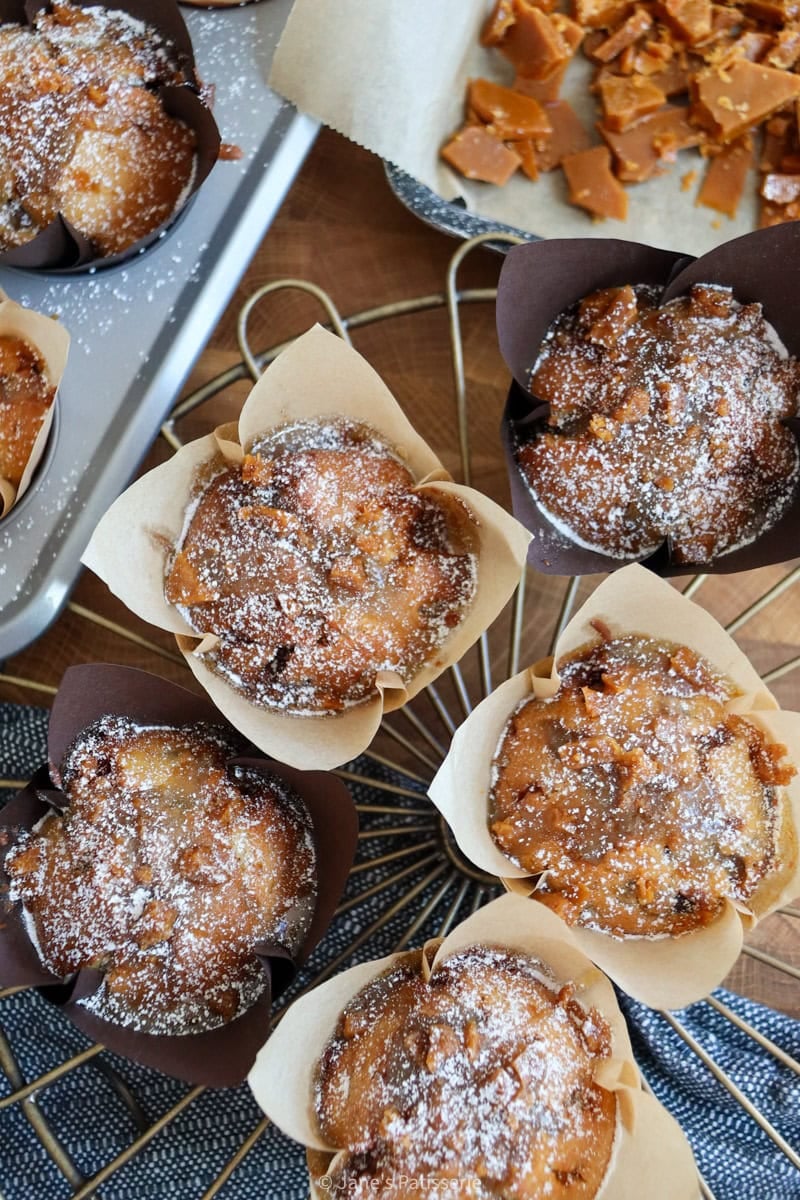
The batter is split into 12 tulip-style muffin cases. These cases are larger than standard muffin tins and allow the muffins to rise fully and accommodate stuffing.
After baking for 22 to 25 minutes until golden, the muffins are removed from the oven. A piping bag is inserted into the top of each muffin. A small amount of sauce—about 1 to 2 tablespoons—is squeezed into the center. This step is optional but recommended for optimal texture and flavor.
After stuffing, a light drizzle of sauce is added over the top. The muffins are then left to cool slightly before being dusted with icing sugar.
Storage and Shelf Life
These muffins are best enjoyed fresh, warm, and immediately after baking. They remain delicious for up to four days at room temperature.
Storage in the refrigerator may lead to drying out. For longer-term storage, the muffins can be frozen for three months or more. When ready to eat, they should be thawed overnight in the refrigerator or at room temperature for about two hours.
Key Considerations and Limitations
The recipe is designed for home bakers with basic equipment. It does not require a mixer, as over-mixing can result in dense, heavy muffins.
While the toffee pieces melt during baking, they firm up as the muffins cool. This means the texture is best when consumed within a few days. Over time, the sauce may lose its gooey consistency.
Some ingredients, like dates, may not appeal to all tastes. The recipe allows for substitution with chocolate, offering flexibility for different palates.
Using small, uniformly chopped pieces of toffee improves distribution and reduces the chance of large pieces sinking to the bottom.
It is important to let the sauce cool slightly before handling. A piping-hot sauce would be too hot to manage and could damage the muffin structure.
Why This Recipe Matters
This recipe honors a traditional British dessert while adapting it into a modern, accessible form. It demonstrates how classic flavors can be reimagined with practical techniques and clear instructions.
By combining a reliable base muffin mix with a customizable stuffing method, the recipe offers both consistency and creativity. It is ideal for home bakers who enjoy experimenting with textures and flavors.
The emphasis on simple, high-quality ingredients—like homemade toffee and natural sugars—aligns with a growing interest in authentic, minimally processed baking.
It also reflects a broader trend in home cooking: the desire to create rich, satisfying desserts without relying on commercial products or complex equipment.
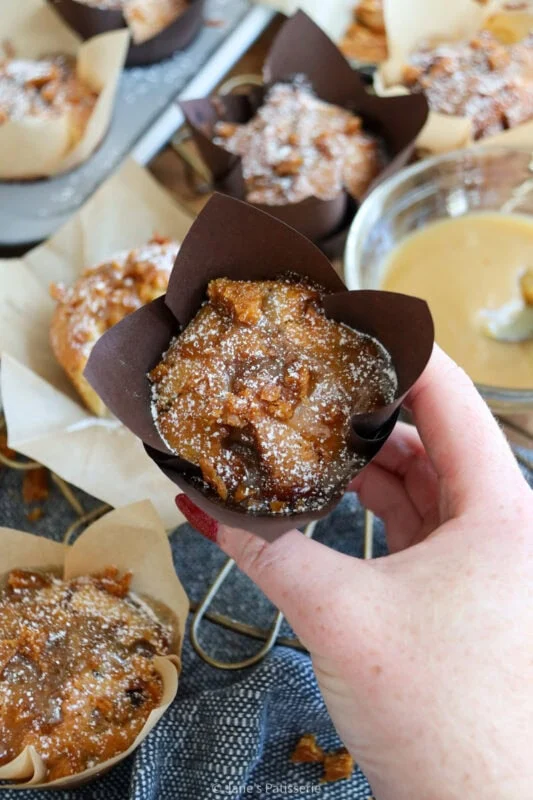
For those who love sticky toffee pudding, these muffins offer a delicious, portable, and easy-to-make alternative.
The recipe is available on Jane’s Patisserie’s website, where it is presented as part of a broader collection of desserts. Readers can explore more recipes through the official site.
Practical Tips for Baking Success
One of the most important aspects of achieving a successful batch of stuffed sticky toffee muffins is proper preparation of the batter. Overmixing is a common mistake that leads to dense, gummy textures. Jane’s Patisserie emphasizes that the batter should be gently stirred, just until the ingredients are combined. This prevents the development of gluten, which can make the muffins tough and heavy.
Using a digital scale to measure ingredients ensures precision. Even small variations in weight—such as 10 grams more or less of flour—can affect the final texture. For instance, too much flour can result in a dry crumb, while too little may lead to a sticky, underbaked center.
When preparing the sticky toffee sauce, it is essential to follow the boiling time precisely. Boiling for only one minute ensures the sauce reaches the right consistency without becoming overly thick or losing its glossy sheen. If the sauce is boiled too long, it may develop a bitter aftertaste and lose the delicate balance between sweetness and richness that defines the classic sticky toffee flavor.
For those who prefer a more robust flavor profile, dark brown soft sugar can be used instead of light brown. This substitution enhances the molasses undertone, which is a hallmark of traditional sticky toffee desserts. However, it is worth noting that this version may be slightly more intense, so it should be tasted before adding to the recipe if a milder flavor is desired.
Chopping the dates into small, even pieces ensures a more uniform distribution throughout the muffin. This not only improves the eating experience but also prevents large chunks from sinking to the bottom during baking. A simple method is to use a knife to slice the dates into thin, uniform pieces, then gently crush them with a fork to achieve a consistent texture.
When using toffee pieces, it is recommended to use only small, bite-sized pieces. Larger pieces may melt completely and form a dense, hard mass in the center, which can interfere with the muffin’s structure. The toffee should melt slightly during baking, then firm up as the muffin cools, creating a textural contrast between the soft crumb and the firm, chewy center.
For bakers who do not have access to a piping bag, a simple alternative is to use a small spoon to gently insert the sauce into the muffin. While this method is less precise, it still allows for a successful stuffing. However, it may result in a slightly uneven distribution, so it is best used when time or equipment is limited.
Finally, the use of tulip-style muffin cases is not optional. These cases are significantly larger than standard muffin tins, providing ample space for the muffins to rise and for the sauce to be properly incorporated. Without sufficient room, the muffins may not rise properly, resulting in a flat, dense texture that fails to capture the desired softness and volume.
Sources & further reading
Featured image: original publisher image. Via original publisher. Image source