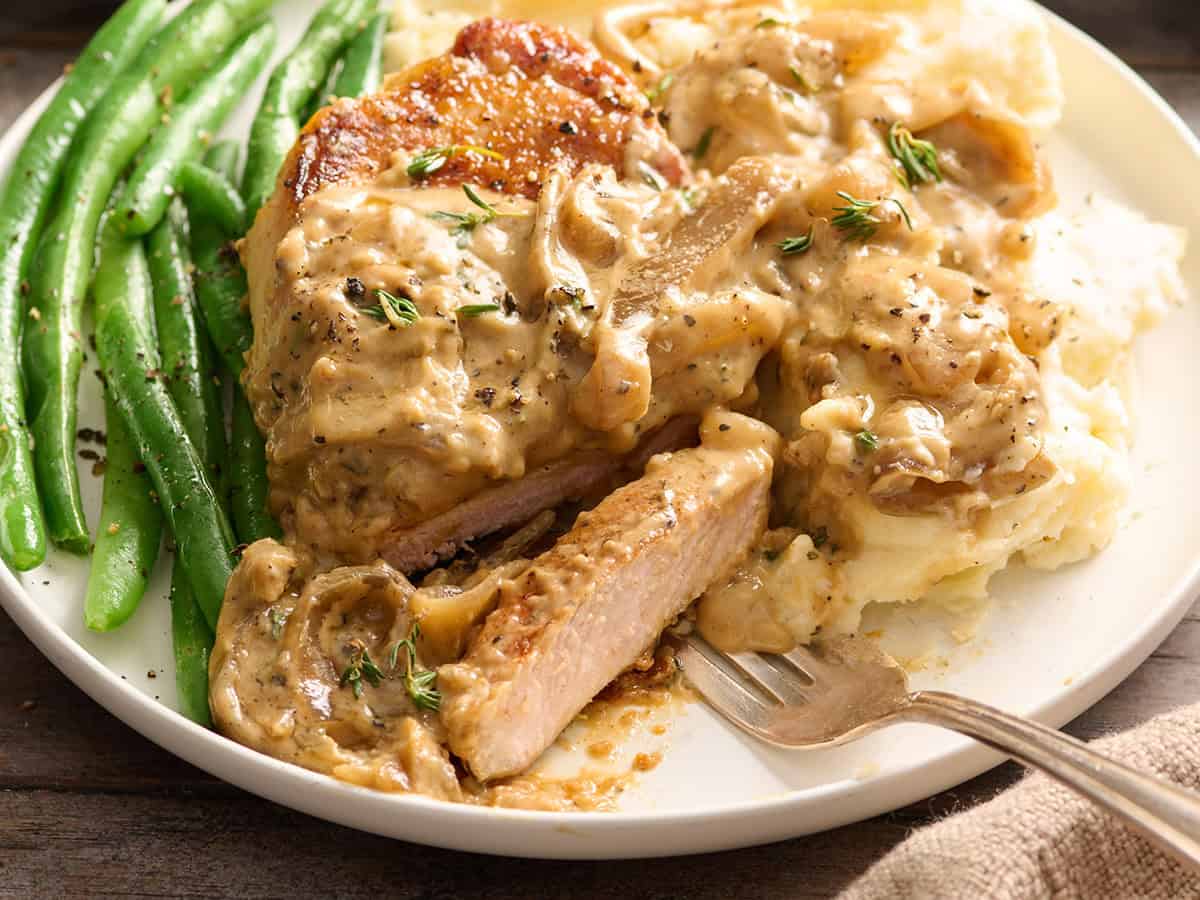
Smothered pork chops are a Southern classic, combining tender pork with a rich, creamy onion gravy. This recipe takes just 35 minutes to prepare and uses simple, affordable ingredients. Source: budgetbytes.com.
How the Recipe Works
The dish begins with boneless pork center-cut chops, which are seasoned with salt, pepper, and paprika. The author, Melissa Nolan, emphasizes that these chops are lean and can dry out quickly.
Before cooking, the chops are patted dry and lightly dredged in flour. This step helps create a golden, crisp crust when seared in a hot cast-iron skillet.
After searing, the chops are removed from the pan and set aside. This allows the gravy to cook without the risk of the meat overcooking.
The onion is sautéed in the same skillet until it softens and begins to brown. Garlic is added next, cooked until fragrant. A roux—made from flour and butter—is formed by stirring the reserved flour into the onion mixture for about a minute.
Chicken broth, heavy cream, and dried thyme are then added. The mixture simmers for five minutes, thickening until it coats the back of a spoon. The author notes that the sauce may seem thin at first but will thicken with time and gentle stirring.
Key Steps and Timing
- Let pork chops sit at room temperature for 10–15 minutes before cooking. This helps them cook more evenly.
- Pat the chops dry with paper towels to ensure a good sear.
- Season each side with ¼ tsp salt, ¼ tsp black pepper, and -½ tsp paprika.
- Dredge the chops in ¼ cup all-purpose flour, then set aside.
- Heat 1 tablespoon vegetable oil in a cast-iron skillet over medium-high heat.
- Place the chops in the skillet and cook undisturbed for 3–4 minutes per side until golden-brown.
- Check the internal temperature of the thickest part of each chop. It should reach 145°F, followed by a 3-minute rest.
- Reduce heat to medium and add sliced yellow onion. Cook for about 5 minutes, stirring occasionally.
- Add 2 tablespoons butter and minced garlic. Cook for 1 minute, stirring frequently.
- Stir in 2 tablespoons of reserved flour and cook for 1 minute to eliminate raw flour taste.
- Add 1 cup chicken broth, ¼ cup heavy cream, ¼ tsp thyme, and the remaining salt and pepper.
- Simmer for 5 minutes, stirring often, until the gravy thickens.
- Return the pork chops and any juices to the skillet. Warm through briefly before serving.
Cost and Ingredient Details
The full recipe costs $5.79, or $1.45 per serving. This includes all ingredients listed, with prices based on current market availability.
- 1 tablespoon vegetable oil: $0.04
- ¼ tsp salt: $0.03
- ½ tsp black pepper: $0.08
- ½ tsp paprika: $0.02
- ¼ cup all-purpose flour: $0.04
- 1 yellow onion (2 cups): $0.74
- 2 tablespoons butter: $0.23
- 2 garlic cloves: $0.12
- 1 cup chicken broth: $0.13
- ¼ cup heavy cream: $0.33
- ¼ tsp dried thyme: $0.03
The author recommends using Better Than Bouillon to make a low-cost chicken broth. This mixture of 1 tsp bouillon and 1 cup water is both affordable and effective.
Heavy cream is used for texture and flavor. However, the author notes it is optional. Whole milk or half-and-half can be substituted, as long as the sauce does not boil.
What to Serve with Smothered Pork Chops
The creamy gravy pairs well with starchy sides that can soak it up.
- Mashed potatoes: A traditional choice. The author recommends starting them before cooking the pork chops, as they take about 25 minutes to prepare.
- White rice: A budget-friendly alternative. It takes 25 minutes to cook and can simmer while the pork chops are being prepared.
- Cheese grits: A Southern-inspired side. Ready in 15 minutes, it can be cooked on a separate burner while the pork is searing.
For extra vegetables, sautéed green beans are suggested. They take about 10 minutes to cook once prepped and add a fresh, garlicky flavor to the meal.
Author’s Personal Experience and Tips
Author Melissa Nolan shares that she has tested this recipe in her Nashville Test Kitchen. The goal is to ensure the dish is easy, affordable, and delicious.

She notes that pork chops are often misunderstood as dry or boring. In her experience, when properly seared and paired with a rich gravy, they deliver a satisfying, flavorful meal.
She advises against overcrowding the skillet. If the chops don’t fit comfortably in one layer, they should be cooked in batches. Crowding traps moisture and prevents a good sear.
She also stresses that the gravy should be tasted before adding more salt. Chicken broth varies in saltiness, so tasting is essential to avoid overseasoning.
For added flavor, sliced mushrooms or bacon can be included. Mushrooms are cooked with the onions until moisture evaporates. Bacon adds a smoky depth and is a common addition in other pork recipes.
Limitations and Considerations
The recipe is designed for boneless center-cut pork chops. Bone-in or thicker cuts will take longer to cook and require more attention to avoid overcooking.
While the recipe is affordable, ingredient prices can vary by region. The author notes that pork chops can be found at a low price—$1.00 per chop—at stores like Kroger.
The gravy thickens with simmering, but if it becomes too thick, a splash of broth can be added. If too thin, it should be simmered longer to reduce.
Heavy cream is not strictly necessary. However, it contributes to the sauce’s velvety texture and rich flavor. Substitutes like whole milk or half-and-half are acceptable as long as the sauce does not boil.
The recipe does not include a nutrition breakdown for the full meal. The provided data is for one serving and is based on the listed ingredients.
There is no mention of allergens or dietary restrictions. The recipe uses flour, butter, and pork, which may not suit those with allergies to these ingredients.
While the recipe is simple, it requires precise timing and temperature control. A thermometer is recommended to ensure the pork reaches a safe internal temperature of 145°F.
The author does not provide a version for children or for low-sodium diets. These are not addressed in the original source.

For those who prefer a different base, vegetable broth or beef broth can be used. These will change the flavor but still produce a good result.
Additional internal links include a Salisbury steak with mushroom gravy recipe, and a creamy pork chops variation that includes mushrooms.
Smothered pork chops are a staple in Southern cooking. This recipe reflects a balance of tradition, affordability, and practicality. It is designed for home cooks who value time, cost, and flavor.
Why This Recipe Works for Busy Home Cooks
One of the key reasons this recipe is so popular among home cooks is its efficiency. The entire process—from prep to serving—takes just 35 minutes, making it ideal for weeknight dinners or meal prep. The use of a single skillet reduces cleanup and eliminates the need for multiple pans or dishes.
The author’s test kitchen experience shows that this method produces consistent results, even when cooking for different numbers of people. The recipe is scalable, allowing for adjustments based on serving size. For instance, doubling the ingredients would require cooking two batches of chops or adjusting the heat to prevent overcrowding.
Another advantage is the minimal equipment needed. A standard cast-iron skillet is sufficient, and no specialized tools are required. This makes the recipe accessible to anyone with basic kitchen tools, regardless of experience level.
The recipe also emphasizes food safety. By recommending an internal temperature of 145°F and a 3-minute rest period, the author ensures that the pork is cooked to a safe level without becoming dry or tough. This balance between safety and texture is critical for maintaining quality in home-cooked meals.
Flavor Development and the Role of Heat
The success of this recipe hinges on the proper use of heat. The initial searing of the pork chops over medium-high heat is crucial. This temperature allows the surface of the meat to brown and develop a crust, which enhances both flavor and texture through the Maillard reaction—a chemical process that occurs when proteins and sugars react under heat.
During the searing phase, the flour coating on the chops helps trap moisture and promotes even browning. The author notes that the chops should be patted dry before seasoning, as any excess moisture can interfere with the sear. This step ensures that the surface of the meat is exposed to the heat, allowing for a more effective crust formation.
After the chops are removed, the pan is used to build the gravy. The gradual increase in heat—from medium to medium-low—allows the onions to soften and begin browning without burning. This slow browning process releases natural sugars and compounds that contribute to the depth of flavor in the sauce.
The addition of garlic and butter during the sautéing phase further enriches the sauce. Garlic, when cooked properly, releases its aromatic compounds, which blend with the onion and butter to form a savory base. The butter also adds a smooth, creamy texture that complements the pork without overpowering it.

The formation of the roux—by combining flour and butter—is a fundamental technique in classic sauces. The author explains that cooking the flour for about one minute removes its raw taste and creates a stable, thickening agent. This step is essential for achieving a smooth, cohesive gravy that coats the back of a spoon.
Practical Tips for Success
One of the most common mistakes home cooks make is overcrowding the skillet. When too many chops are placed in the pan at once, the heat is trapped, and the surface moisture is not fully evaporated. This results in steaming rather than searing, leading to dry, less flavorful chops.
To avoid this, the author recommends cooking the chops in batches. If the pan does not fit all the chops comfortably in one layer, it’s better to cook them in smaller groups. This ensures that each chop gets adequate heat and space to develop a golden crust.
Another practical tip is to start the preparation of side dishes before the pork chops are cooked. This not only saves time but also ensures that the sides are fully cooked and ready to serve when the main dish is finished.
For those who are new to cooking with pork, the author suggests starting with boneless center-cut chops. These are more consistent in thickness and easier to cook evenly than thicker or bone-in cuts. If using a thicker cut, the cooking time will need to be extended, and the internal temperature should be monitored closely to prevent overcooking.
Finally, the author emphasizes that taste should always be the final decision. Before adding any more salt or seasoning, the gravy should be tasted. Chicken broth can vary significantly in salt content depending on the brand and source. A small taste test ensures that the final dish is balanced and not overly salty.
Adapting the Recipe for Different Preferences
While the original recipe uses a simple onion and garlic base, it is highly adaptable. For instance, adding sliced mushrooms during the sautéing phase can introduce a meaty, earthy flavor.
Adding bacon to the pan before the onions can provide a smoky, savory depth. The bacon should be rendered in the pan before adding the onions, allowing the fat to infuse the dish. This addition is common in many Southern-style pork dishes and enhances the overall flavor profile.
For those with dietary preferences, the recipe can be modified. For example, using vegetable broth instead of chicken broth will result in a lighter, more plant-based flavor. While the taste will differ slightly, the texture and consistency of the gravy remain unchanged.
Those looking for a lower-fat option might consider substituting the heavy cream with a non-dairy alternative such as coconut milk or almond milk. However, the author notes that these substitutes may not provide the same richness, and the sauce may require additional thickening to maintain its texture.
For a gluten-free version, all-purpose flour can be replaced with a gluten-free flour blend. The author does not provide specific testing for this variation, but the roux method can still be applied with proper adjustments to ensure a smooth, thick consistency.
It’s important to note that while the recipe is designed for simplicity and affordability, it still delivers a restaurant-quality result. The balance of searing, sautéing, and simmering creates a dish that is both comforting and satisfying, making it a favorite among families and casual diners alike.
Sources & further reading
Featured image: Side view of smothered pork chops on a plate with a fork and green beans.. Via original publisher. Image source