A new meditation practice offers a gentle, realistic approach to gratitude—one that doesn’t demand happiness or denial of difficulty.
Gratitude Without Pretense
Traditional gratitude exercises often ask people to feel thankful, even when life feels hard. This can feel like a performance, especially during times of stress or loss. Such practices may inadvertently encourage people to suppress or rationalize difficult emotions, turning gratitude into a form of emotional self-management rather than a mindful acknowledgment of reality.
Shamash Alidina, a mindfulness teacher with over two decades of practice, offers a different path. His meditation emphasizes presence over performance. Rather than asking individuals to produce feelings of gratitude, Alidina invites them to simply observe what is happening in their lives—without judgment or expectation. This approach aligns with the principles of mindfulness, which prioritize awareness and acceptance over emotional regulation.
How the Practice Works
Begin by finding a comfortable position—sitting or lying down. Eyes may be closed or open with a soft gaze. There is no need to feel calm, happy, or grateful. The goal is not to achieve a particular emotional state, but to create a space where one can be fully present with whatever is occurring.
- Notice where your body touches the ground or surface beneath you. This simple awareness grounds you in the physical world.
- Feel the natural rhythm of your breath—no need to change it. This allows you to tune into the body’s internal processes without effort.
- Allow whatever you’re feeling—restlessness, worry, loneliness, or sadness—to be present without judgment. These emotions are not to be eliminated or dismissed; they are simply acknowledged as part of the human experience.
Alidina encourages acknowledging how life is right now. This might include a worry about an upcoming event, a sense of missing someone, or a moment of quiet peace. The key is honesty, not idealization. This honest observation creates a foundation for deeper emotional awareness.
Creating Space for Feelings
One of the practice’s core ideas is making room for difficult emotions. Alidina compares this to making space for a visitor at the door—no obligation to invite them to stay. This metaphor is powerful because it reflects how we often treat emotions: as temporary guests that we can welcome or send away at will.
He says, There’s no need to talk yourself out of how you feel. Let yourself be a human being with human experiences.
This statement underscores the importance of self-compassion. When we allow ourselves to feel without resistance, we reduce the internal conflict that often arises when we try to ‘fix’ our emotions.
Finding a Small Good
Next, look for a small, ordinary thing to appreciate. Examples include a warm drink, a memory of laughter, a comfortable bed, or a quiet moment of stillness. These are not grand achievements or life-changing events—they are simply moments that have been noticed and valued in the past.
If nothing comes to mind, simply notice the support beneath your body or feel your feet on the floor. That is enough. The practice does not require a ‘positive’ thought or a ‘happy’ memory. It simply asks you to recognize what is already present, even if it is minimal.
When a good moment is found, explore it gently. Ask: What about this matters to me? Does it bring warmth, comfort, connection, or relief? Maybe it’s simply pleasant. Don’t force the feeling to be bigger than it is. The value lies not in intensity, but in presence.
Holding Difficulty and Goodness Together
Alidina teaches that gratitude doesn’t require you to ignore pain. You can feel worried and still appreciate being supported. You can feel sad and remember someone you love. You can feel lonely and appreciate a small, kind interaction. This is not about balancing emotions, but about recognizing that both difficulty and joy can coexist in the same moment.
He suggests imagining one hand holding difficulty and the other holding a small moment of appreciation. This creates balance, not contradiction. It reflects the reality of human experience—where joy and sorrow are not opposites, but coexisting parts of life.
What This Moment Points Toward
Ask: What value does this small good represent? Is it connection, kindness, friendship, health, creativity, or a little space to stop and breathe? Is there one small action you could take today to bring more of it into your life? You could send someone a message, step outside, take a proper break, or offer yourself a little more patience.
If today is hard, the kindest thing may simply be to allow yourself some rest or support. Gratitude, in this view, is not about pretending everything is fine. It is about honoring what is real—both the hard and the good.
Why This Matters
Many people struggle with gratitude because it’s often taught as a positive emotion to be produced, not a mindful awareness of what is already present. Alidina’s approach avoids that trap. It honors both difficulty and small joys—without requiring one to be sacrificed for the other.
Limitations and Considerations
The practice is designed for individuals, not groups or clinical settings. It does not replace professional mental health support. It assumes a basic level of self-awareness and does not address deeper emotional or psychological conditions.
Some may find it difficult to identify a small good when feeling deeply low. The practice does not guarantee emotional relief. It is not a substitute for therapy or emotional support services. However, it can serve as a valuable tool for cultivating emotional resilience and self-compassion.
Shamash Alidina has been practising mindfulness since 1998 and runs his own successful training organisation. He is the author of Mindfulness For Dummies and most recently, The Mindful Way Through Stress . He frequently appears in newspapers, magazines, and on radio shows. Based in London, he runs online trainings and speaks at conferences all over the world.
For those seeking a deeper exploration of gratitude in difficult times, see Gratitude When Struggling: A Mindful Perspective.
Available on Mindful.org, this meditation is part of a broader effort to make mindfulness accessible and realistic.
Sources & further reading
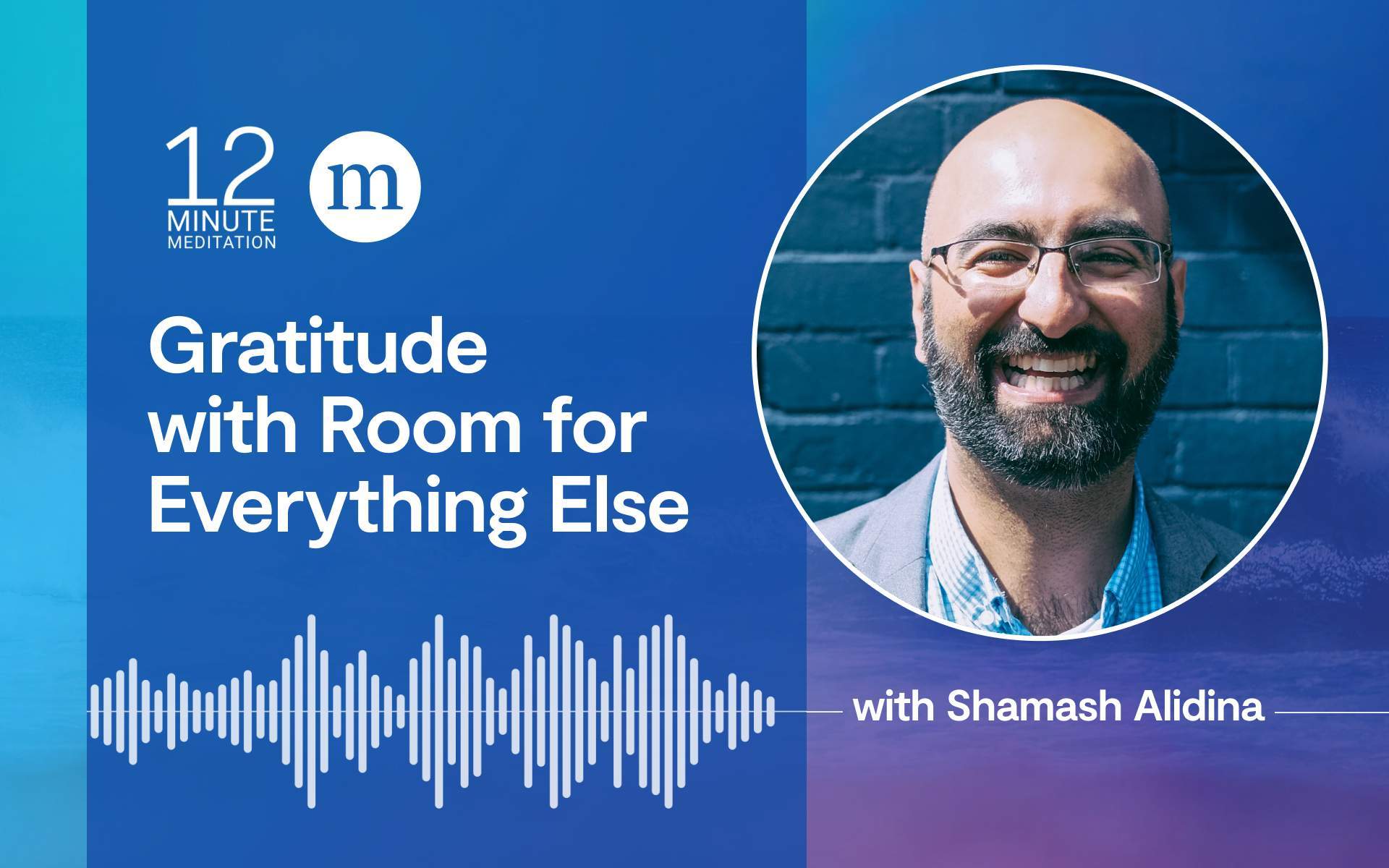
Featured image: 12-minute Shamash Alidina meditation focusing on gratitude while making room for everything else.. Via original publisher. Image source