AI-generated fashion imagery is blurring the line between reality and fiction. Luxury brands now face growing challenges as synthetic images—both fake and distorted—appear online with increasing frequency and credibility. Source: vogue.com.
From Fake Jackets to Distorted Trousers
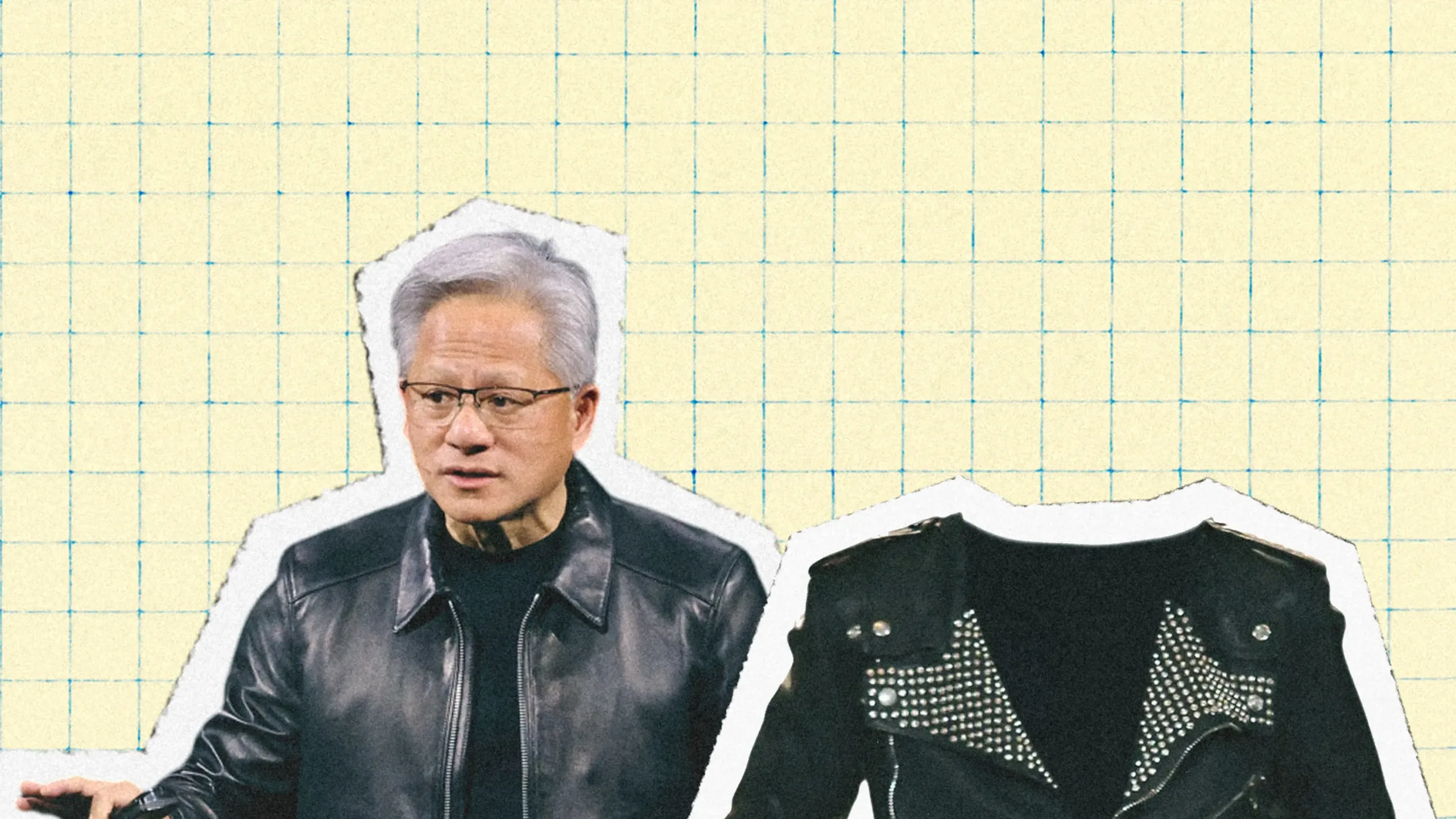
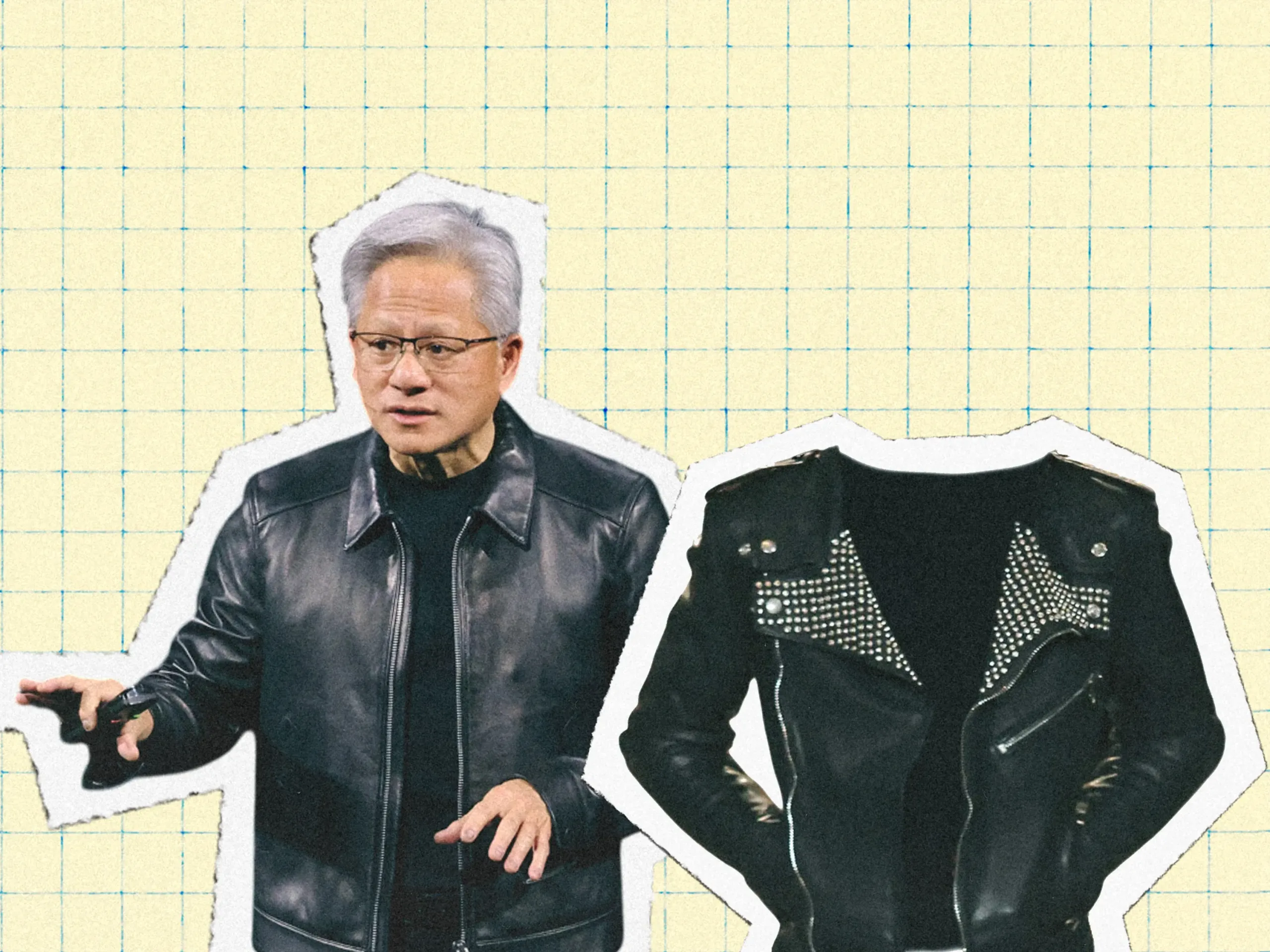
Earlier this month, a viral post showed Nvidia CEO Jensen Huang wearing a Saint Laurent leather jacket from Hedi Slimane’s era. The image was captioned with a reference to an alleged affair with a Chinese spy.
It quickly gained traction on social media, with users celebrating Huang as a ‘Hedi boy.’ But the jacket had never been worn by him. The original photo, revealed by CNN, showed Huang in a Dior jacket at Seoul airport in June.
Vanity Fair confirmed the Instagram post was altered using artificial intelligence. The images were not authentic. The post was removed shortly after, but the illusion had already spread widely.
What makes this incident particularly significant is not just the deception itself, but the way it was amplified by social media algorithms. These platforms prioritize engagement, and content that evokes strong emotional reactions—such as admiration for a celebrity wearing a high-end garment—tends to be promoted even if it lacks factual grounding. In this case, the post leveraged the public’s fascination with luxury fashion and the personal lives of tech leaders, creating a narrative that felt both plausible and emotionally resonant.
Designers and fashion critics have long emphasized that the value of a garment lies not just in its material or craftsmanship, but in its visual presentation. A jacket from Hedi Slimane’s tenure at Saint Laurent is not merely a piece of clothing—it is a cultural artifact, symbolizing a specific era of design, tailoring, and aesthetic philosophy. When such a garment is falsely attributed to a real person, it undermines the integrity of both the individual and the brand. The public’s perception of authenticity is thus compromised, not just in the image, but in the broader cultural understanding of what fashion represents.
Real Garments, AI-Generated Errors
Not all cases involve fiction. In some instances, real products are misrepresented online. Designer Reese Cooper discovered inaccuracies on Ssense, a major luxury retailer, when browsing its website.
The images showed his brand’s signature hook—its key trademark—enlarged to twice its actual size. Cooper says the design details were distorted, and the branding was misrepresented.
‘Our hook is a major part of our branding,’ Cooper says. ‘All of the logos are part of what makes our brand recognizable. To have them misrepresented is a serious issue.’
Similar errors were found in Gerrit Jacob’s trousers. The images included an invented waistband, extra seams, and altered lettering. Fashion commentator Odunayo Ojo notes that AI models prioritize ‘plausibility’ over precision.
‘AI pulls everything toward an average,’ Ojo says. ‘Design lives in the details that depart from that average. Plausible is fine for a moodboard. On a product page, plausible is misrepresentation.’
These distortions are not merely aesthetic—they affect consumer decision-making. A customer who sees a product image with exaggerated features may perceive it as more luxurious or innovative than it actually is. This perception can lead to a mismatch between expectation and reality, resulting in dissatisfaction after purchase. In a market where trust is built over time, such inconsistencies erode confidence in both the product and the retailer.
Cooper’s experience highlights a broader issue: the lack of accountability in digital content creation. When a brand shares an image of its product without human oversight, it assumes responsibility for the final output. But if that image is generated by AI, the responsibility shifts to the tool, the user, or the platform—none of which are clearly defined in current legal or ethical frameworks.
How Ssense Responded
Ssense acknowledged the inaccuracies in a statement to Vogue Business. The company said accurate representation of partners’ products is fundamental.
It admitted that some recent e-commerce imagery did not meet that standard. The company has taken steps to resolve the issue with urgency.
Ssense had previously laid off its full-time photography and retouching teams in June. This was part of a shift toward AI-powered tools like Virtual Try-On (VTON), launched in August.
The company confirmed that organizational changes in June affected roles in its visual content department. However, it did not explicitly link the AI tool to the image inaccuracies.
While the company claims to have improved quality controls, the timeline suggests a gap between strategic investment in AI and operational execution. The transition from human-led visual content to AI-driven production is not simply a technical upgrade—it involves a fundamental shift in how design, authenticity, and brand identity are managed. Without clear protocols for image validation, such transitions can result in unintended consequences, such as the misrepresentation of real products.
AI’s Growing Role in Fashion
AI-generated images have become easier to produce. Tools are now integrated into chatbots and available as open-source software.
Henry Ajder, a synthetic media expert, says it’s now simple to create highly realistic content with minimal technical knowledge.
‘It’s at the point where it’s really easy to create highly realistic content with minimal knowledge of how to optimize for the tool you’re using,’ Ajder says.
Fashion is especially vulnerable. The industry produces vast amounts of high-quality, stylized imagery—ideal training data for AI models.
‘We’ve reached a tipping point,’ Ajder says.
For instance, in April, AI-generated images showed celebrities including Megan Fox and Robert Pattinson wearing fictional Balenciaga designs made from cardboard shipping boxes. Another fake imagined the Olsen twins in a Louis Vuitton campaign. These images were not only visually convincing but also leveraged real celebrity identities and brand associations to generate engagement.
Similarly, in May, after Swatch and Audemars Piguet teased a collaboration, AI-generated images of a colorful Royal Oak wristwatch circulated online. The actual release was a collection of Bioceramic pocket watches, disappointing fans who had come to expect a product that never existed. This case illustrates how AI-generated content can manipulate consumer expectations, turning anticipation into disillusionment.
Why This Matters to Brands
For designers like Cooper, the issue is more than aesthetic—it’s about trust and commercial impact.
‘Simply put, it’s brand damage,’ Cooper says. ‘RC Outdoor Supply is a new company. All we have is our trademarks and reputation. To have them questioned by customers erodes trust.’
Accurate product images affect sales. Inaccurate listings can deter purchases or lead to returns. Removing images means lost revenue.
‘Ssense has removed the images,’ Cooper says. ‘I’m thankful. But it also removed the ability for anyone to purchase those items. That will result in low sales when looking at this season’s data.’
Experts say the problem is particularly acute in luxury, where small design decisions and fit often underpin a garment’s value. ‘In luxury, the details are the price,’ Ojo says. ‘If the image erases them, you’ve erased the reason the garment costs what it costs—the problem isn’t AI as a tool, it’s using it for the one job where accuracy is the whole point.’
Legal Challenges Remain
Most wholesale contracts do not address AI-generated imagery. Shermin Lakha, a fashion attorney, says designers absorb the reputational harm and returns when retailers misrepresent products.
‘There is no single, universal cause of action’ for brands to challenge unauthorized AI-generated images, says Susan Scafidi of the Fashion Law Institute.
Trademark and false advertising claims may apply where recognizable products or logos are involved. But legal remedies are limited when no product is sold—such as in the Huang case.
Lakha notes that existing law targets commercial actors, not viral, non-monetary fakes. The gap in legal protection is significant.
For example, in the Huang case, the AI-generated image did not result in any sale or commercial activity. Yet it circulated widely and created a narrative that linked a real person to a fictional garment. Because no product was sold, traditional legal claims—such as false advertising or trademark infringement—do not apply. This creates a legal vacuum where brands have little recourse, even when their image is distorted or falsely attributed.
What Brands Can Do
Traditional image monitoring tools—like logo detection—are no longer sufficient. Newer systems analyze entire images for unreleased colorways, inaccurate hardware or recognizable patterns, even when logos have been removed.
Experts recommend brands distinguish between harmful images and harmless memes. When necessary, they should work with platforms to remove content and respond through official channels.
Lakha advises tighter contracts and internal verification before sharing any images online.
Odunayo Ojo suggests human review of all product images. He says designers should disclose when AI has been used to alter a garment.
‘A small AI label costs nothing,’ Ojo says. ‘Finding out later is what causes scandals and also costs Ssense the customer.’
The Cultural Shift in Luxury
Luxury fashion has long relied on image control—campaign casting, logo placement, and brand consistency.
AI makes that harder. As more images are generated without human oversight, the value of visual authenticity grows.
Lizzie Wheeler, founder of Studio Dorothy and a resale expert, sees consumers becoming more discerning. Brands are returning to human craftsmanship as a signal of ‘realness’.
‘I’d advise all retailers against pulling wool over the customer’s eyes,’ she says. ‘The consumer is becoming increasingly educated.’
She points to hand-drawn Prada holiday campaigns as examples of authentic, human-led design that resonate with consumers.
The irony is that fashion’s most famous fakes—like a Balenciaga watch made from cardboard—often use recognizable luxury signatures. As these become easier to imitate, proving what is real becomes a core part of luxury identity.
‘The ability to prove what’s real is becoming a more valuable part of luxury itself,’ Wheeler says.
Sources & further reading
Featured image: original publisher image. Via original publisher. Image source