Palazzo Sogni has reimagined a 16th-century Florentine palazzo into a modern hotel that honors its history without replicating it. The project, led by designers Elena and Giulia Sella, blends restored frescoes, local craftsmanship, and bespoke interiors into a cohesive, dreamlike experience.
Historic Foundations
The palazzo originally formed part of Palazzo Testa, constructed by the Martelli family. Among its most significant features is a nymphaeum—an ornamental fountain structure—traditionally attributed to the renowned sculptor Baccio Bandinelli. This architectural element is not only a visual centerpiece but also a symbol of the palazzo’s historical significance. The nymphaeum’s stone fountain, with its intricate carvings and balanced composition, exemplifies the craftsmanship of the time and continues to serve as a focal point in the hotel’s public spaces.
The palazzo also contains a series of historic frescoes that span several centuries, including works by Luigi Catani and Antonio Marini. These frescoes, painted on the ceilings and walls of various rooms, depict a range of themes—from mythological scenes to allegorical representations—offering a window into the artistic and intellectual currents of the time. During the renovation process, layers of paint that had accumulated over centuries were carefully removed using non-invasive techniques. This restoration was not merely about returning the building to its original state; it was a deliberate act of discovery, revealing decorative elements that had been hidden for decades.
Design Philosophy: Dreaming in Architecture
The Sella sisters began their work with a clear principle: preservation must come before innovation. As they explain, ‘From the beginning, it was essential to preserve the character and soul of the palazzo.’ This philosophy guided every decision, ensuring that no historic feature was compromised or overshadowed by modern interventions.
Original ceiling frescoes were restored using methods that respected both the pigments and the structural integrity of the surfaces. In some cases, the frescoes were not only cleaned but also stabilized with new layers that mimic the original paint composition. The marble flooring, which originally featured a checkerboard pattern, was recreated using a combination of traditional techniques and modern materials to replicate the original aesthetic while ensuring durability and resistance to wear.
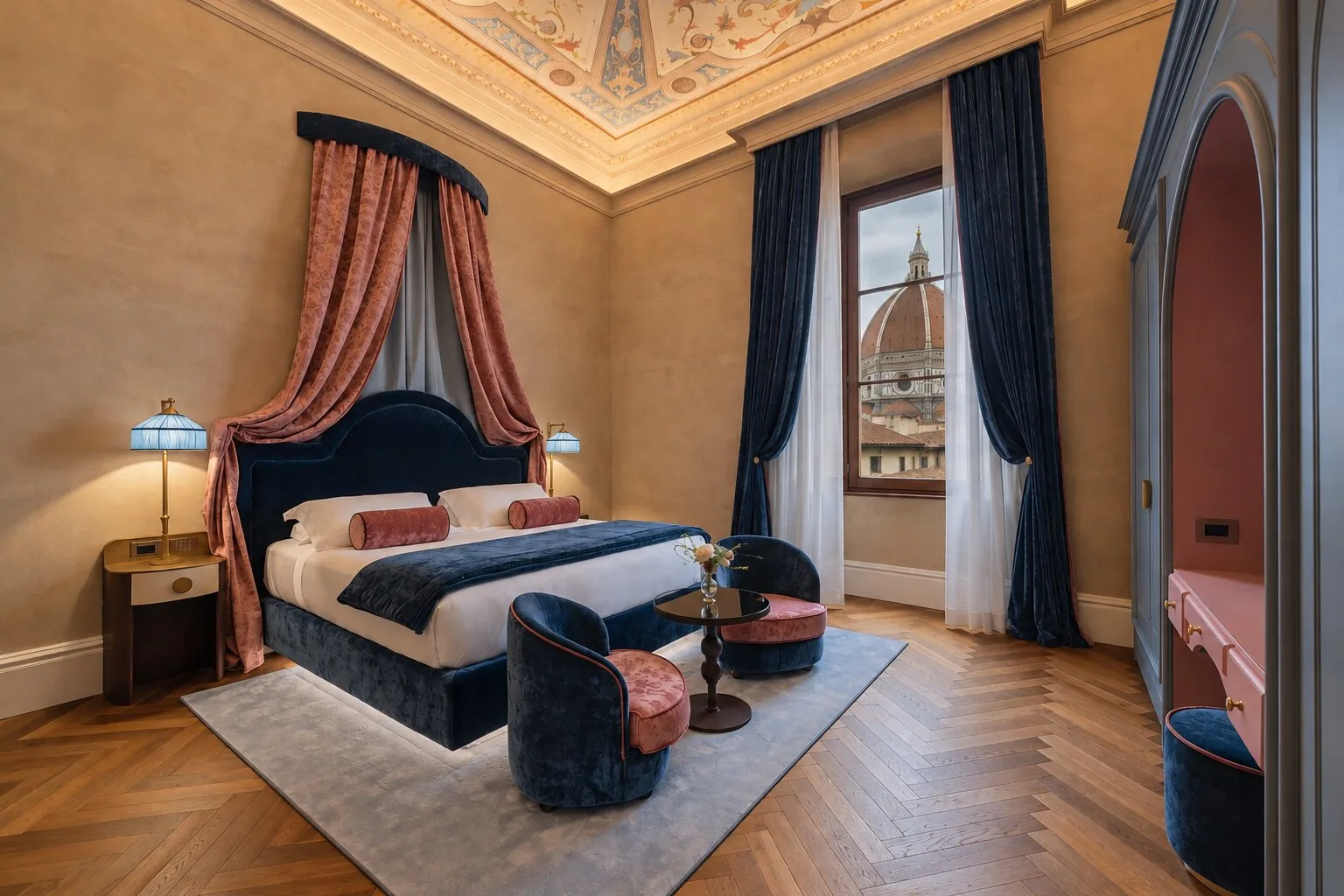
The design concept centers on the idea of ‘dreaming.’ This is not a metaphor but a guiding principle that shapes the entire interior experience. The concept of dreaming is woven into the spatial flow of the hotel—rooms are designed not just as sleeping spaces, but as environments that invite guests to pause, reflect, and feel immersed in a sense of wonder. This is achieved through the careful sequencing of color, light, and material choices that create a narrative of discovery and intimacy.
Color, Texture, and Material Choices
The color palette is directly inspired by the historic decorative schemes of the palazzo. Powder blue, which the designers associate with serenity and tranquility, becomes the signature hue throughout the reception, corridors, and boutique. This shade was chosen not only for its visual appeal but because it closely matches the original wall treatments found in the 16th-century rooms.
Complementary tones—mint green, blush pink, and ochre—are used to create dynamic yet harmonious combinations. These colors are paired with rich fabrics such as velvets and silks, which add depth and warmth to the spaces. Warm metallic accents, such as brass and copper, are introduced subtly to enhance the sense of luxury without overwhelming the environment.
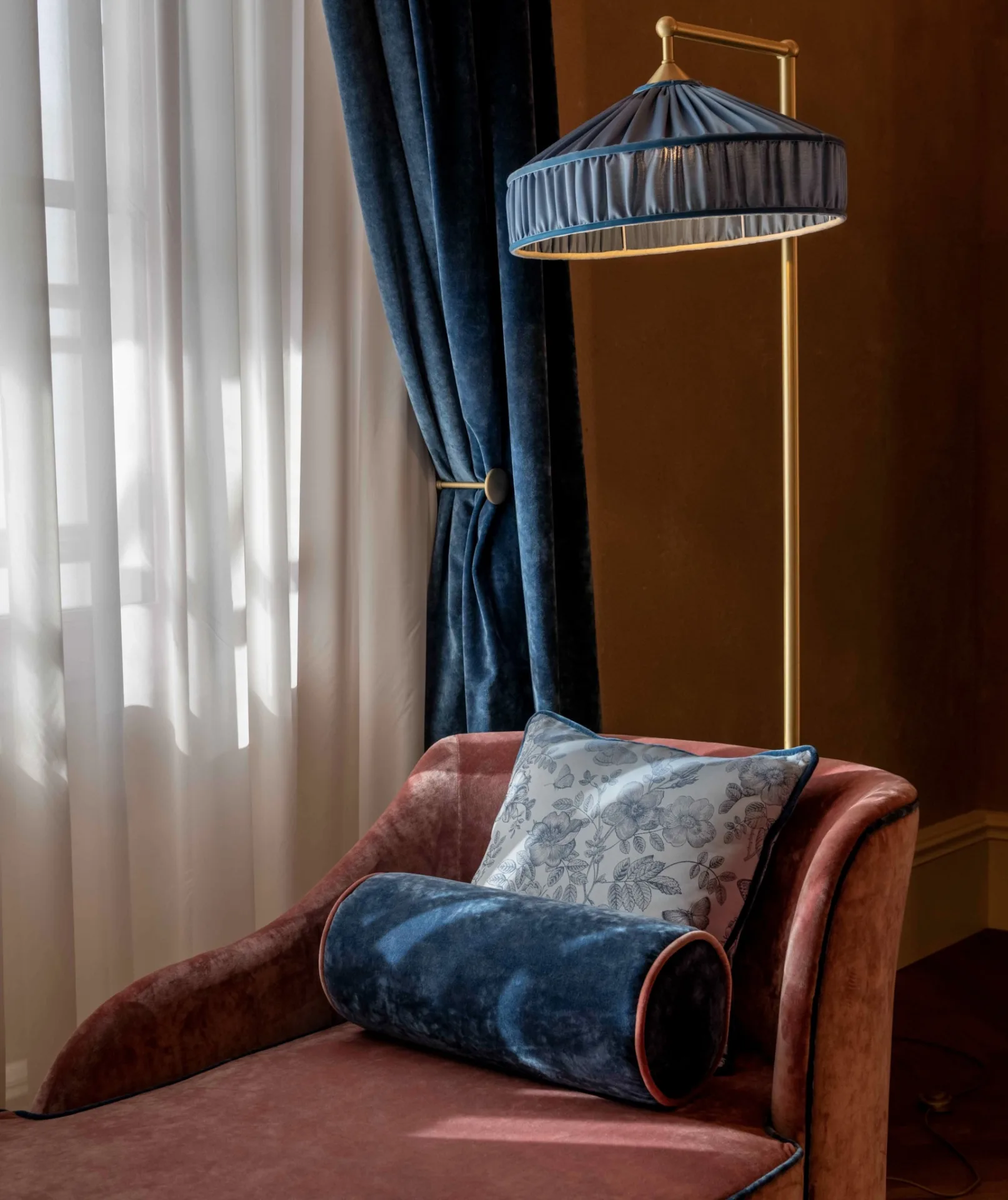
The designers emphasize that their focus is on texture rather than excess. For instance, some velvets have a subtly iridescent finish that shifts in hue depending on the angle of light, introducing movement and depth. This effect mimics the way light interacts with the original frescoes, reinforcing the connection between past and present. Where possible, original lime-based wall finishes were preserved, as they contribute to the authenticity of the space and reflect the materials used in Renaissance construction.
Bespoke Furniture and Craftsmanship
Every piece of furniture in the hotel was custom-designed, not sourced from existing collections. This decision was rooted in the desire to create a unique, place-specific identity that could not be replicated elsewhere. The Sella sisters describe their approach as a ‘couture design collection’—a bespoke language developed specifically for Palazzo Sogni, where form, function, and historical context converge.
Each piece responds to the room’s proportions and the presence of historic frescoes. For example, a chaise longue or dedicated seating area may appear only in rooms where space and scale allow, ensuring that the furniture does not dominate the space but instead complements the architectural features. The collection includes sculptural wardrobes with carved details, four-poster beds with ornate headboards, upholstered seating, benches, armchairs, occasional tables, and custom lighting fixtures that are integrated into the architectural structure.
Textiles and Local Collaboration
The hotel’s signature Floral Butterfly pattern was developed in collaboration with Florence-based textile company Alessandro Bini. This collaboration was not a simple design transfer but a process of co-creation, where the Sella sisters worked with artisans to translate a conceptual motif into a tangible, tactile fabric.
A dedicated loom was set up to produce a silk-based jacquard with a distinctive texture and relief. The fabric’s surface features a soft, hand-woven quality that gives it a three-dimensional quality, enhancing its visual and tactile presence. This fabric appears on bed canopies, armchairs, and wardrobe interiors, where it serves both aesthetic and functional purposes.
Bespoke linens and terry collections from Italian manufacturer Rivolta Carmignani add another layer of craftsmanship. These textiles are not only visually rich but also durable, ensuring that they meet the practical demands of a luxury hotel while maintaining a connection to traditional Florentine textile techniques.
Tableware and Material Details
The hotel’s tableware features a reimagining of Ginori 1735’s Antico Doccia collection. The porcelain is rendered in powder blue and incorporates floral and butterfly motifs, echoing the design language of the hotel’s textiles. This integration of heritage brands with contemporary design reflects a broader trend in luxury hospitality: the blending of historical references with modern aesthetics.
One of the more unexpected materials is aged amber mirror. It appears in bathrooms, elevators, and large architectural surfaces. The designers explain: ‘It feels elegant and warm while visually lightening larger volumes through reflection.’ The reflective quality of the mirrors helps to create a sense of openness in substantial spaces, while the warm, earthy tone of the amber adds a human, organic quality to the otherwise formal architecture.
Amber mirrors are repeated throughout the property, creating a subtle visual connection between otherwise distinct spaces. This repetition reinforces the idea of a continuous, dreamlike journey through the hotel’s spaces.
Public Spaces and Experiential Design
The Secret Garden centers on the historic nymphaeum and its fountain. A visual axis from the entrance draws guests toward the architectural feature, guiding their movement and attention. The garden is planted with species inspired by traditional Italian gardens, including lavender, rosemary, and boxwood, which evoke the scent and atmosphere of historical Florentine gardens.
Custom furnishings—such as low-slung benches and sculptural planters—are placed strategically to frame the fountain without overwhelming it. Lighting is carefully calibrated to highlight the fountain at different times of day, creating a dynamic interplay between light and form. The designers state: ‘We wanted the nymphaeum to remain one of the strongest architectural moments of the property.’ This approach ensures that the fountain remains a central feature while allowing the surrounding garden to evolve into a more contemporary, inviting space.
Segreto, the signature restaurant, blends botanical references with views of the courtyard garden. The menu features ingredients sourced from local farms, reinforcing the connection between the hotel and the surrounding environment. La Sala della Musica preserves the atmosphere of a historic salon through original frescoes and contemporary furnishings, offering guests a space that feels both timeless and alive.
The Sotto le Stelle rooftop provides an open-air experience with panoramic views of Florence’s Duomo. The space is designed to be both functional and poetic, with seating areas that invite guests to linger and enjoy the city’s skyline at dusk or dawn.
Design as Experience
Not all interventions are subtle. Brass ‘Press for Champagne’ buttons appear in guest rooms, adding a moment of playful interaction. These small details reflect a broader intent: to go beyond visual design and create meaningful, human-centered experiences. The designers explain: ‘Conservation was always the starting point… we wanted to introduce a stronger sense of experience and discovery.’ These moments of interaction are not gimmicks but intentional design elements that invite guests to engage with the environment in a more personal way.
Why This Matters
Palazzo Sogni demonstrates how historic buildings can be reinterpreted without losing their authenticity. It shows that preservation and innovation can coexist, not as opposing forces, but as complementary elements in a shared design language.
By working with local artisans and using regional materials, the project supports sustainable design and local economies. The emphasis on craftsmanship ensures that each element of the hotel is not only beautiful but also built with care and intention.
It also sets a precedent for how luxury hospitality can integrate cultural heritage into daily guest experiences. Rather than presenting history as a static display, Palazzo Sogni turns it into a living, evolving narrative that guests can experience through every detail of their stay.
Limitations and Open Questions
The project does not address long-term maintenance of the frescoes or the structural integrity of the building. These remain under the responsibility of professional conservators. Ongoing monitoring and care will be essential to ensure that the historic elements remain stable and intact over time.
There is no public data on guest satisfaction or occupancy rates. The success of the hotel in terms of user experience remains unmeasured. Future evaluations could provide insight into how well the design philosophy of ‘dreaming’ resonates with visitors.
While the design is rooted in history, it is not clear how widely the concept of ‘dreaming’ can be replicated in other historic buildings. Further research would be needed to assess whether such a design approach could be scaled or adapted to other architectural contexts.
For now, Palazzo Sogni stands as a model of thoughtful, respectful, and innovative design in a historic setting.
Visit the official Palazzo Sogni website
Sources & further reading
Featured image: Photography courtesy of Palazzo Sogni. Via original publisher. Image source