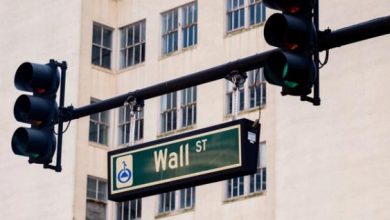
Stocks may face a ‘doom loop’ if Wall Street underestimates the risk of a hard economic landing, according to a Bank of America strategist. Source: marketwatch.com.
What Happened
The S&P; 500 is approaching a level that some analysts consider worth buying—provided the U.S. avoids a recession.
However, a strategist from Bank of America has warned that financial markets may be underestimating the risk of a hard-landing economic downturn.
He argues that investors should delay buying high-risk assets until the full scope of economic risks is better understood.
Key Facts
- The S&P; 500 is near a level seen as a potential buying point if the U.S. avoids a recession.
- The warning comes from a Bank of America strategist, who cited a ‘doom loop’ scenario as a risk.
- ‘Doom loop’ refers to a situation where rising economic volatility leads to market corrections, which in turn trigger more volatility.
- Investors are advised to wait before purchasing risky assets like tech stocks or emerging market equities.
Why It Matters
Markets often price in short-term optimism, assuming economic conditions will remain stable.
But if a downturn occurs unexpectedly—due to inflation spikes, interest rate hikes, or financial instability—markets could react sharply.
When stock prices fall, it can trigger a chain reaction: falling confidence, reduced spending, and lower business revenues.
This could create a feedback loop where each market drop fuels more uncertainty, leading to further declines.
Background: How the ‘Doom Loop’ Works
A hard landing means an economy slows sharply without a controlled transition.
When this happens, consumer spending drops, corporate earnings fall, and stock prices fall.
Investors may panic and sell assets, increasing market volatility.

As confidence erodes, businesses cut back, leading to layoffs and further economic weakness.
These actions can deepen the downturn, creating a self-reinforcing cycle.
Limitations and Uncertainties
The source does not specify how likely a hard landing is.
It does not provide data on past hard landings or how often such loops have occurred.
There is no mention of specific policy tools or central bank responses that could prevent such a scenario.
The warning is based on a single strategist’s view, not a consensus among analysts or institutions.
What to Watch Next
Market reactions to new inflation data, especially from the labor market.
Central bank statements on interest rate policy could signal whether a downturn is likely.
Investor sentiment indicators, such as trading volume and volatility metrics, may show early signs of a shift in market confidence.
For a deeper look at how Wall Street is interpreting recent earnings, see what Wall Street analysts are saying after Nvidia’s beat-and-raise quarter.
Market conditions are always evolving. This analysis reflects only the information available in the original source.
Sources & further reading
Featured image: original publisher image. Via original publisher. Image source