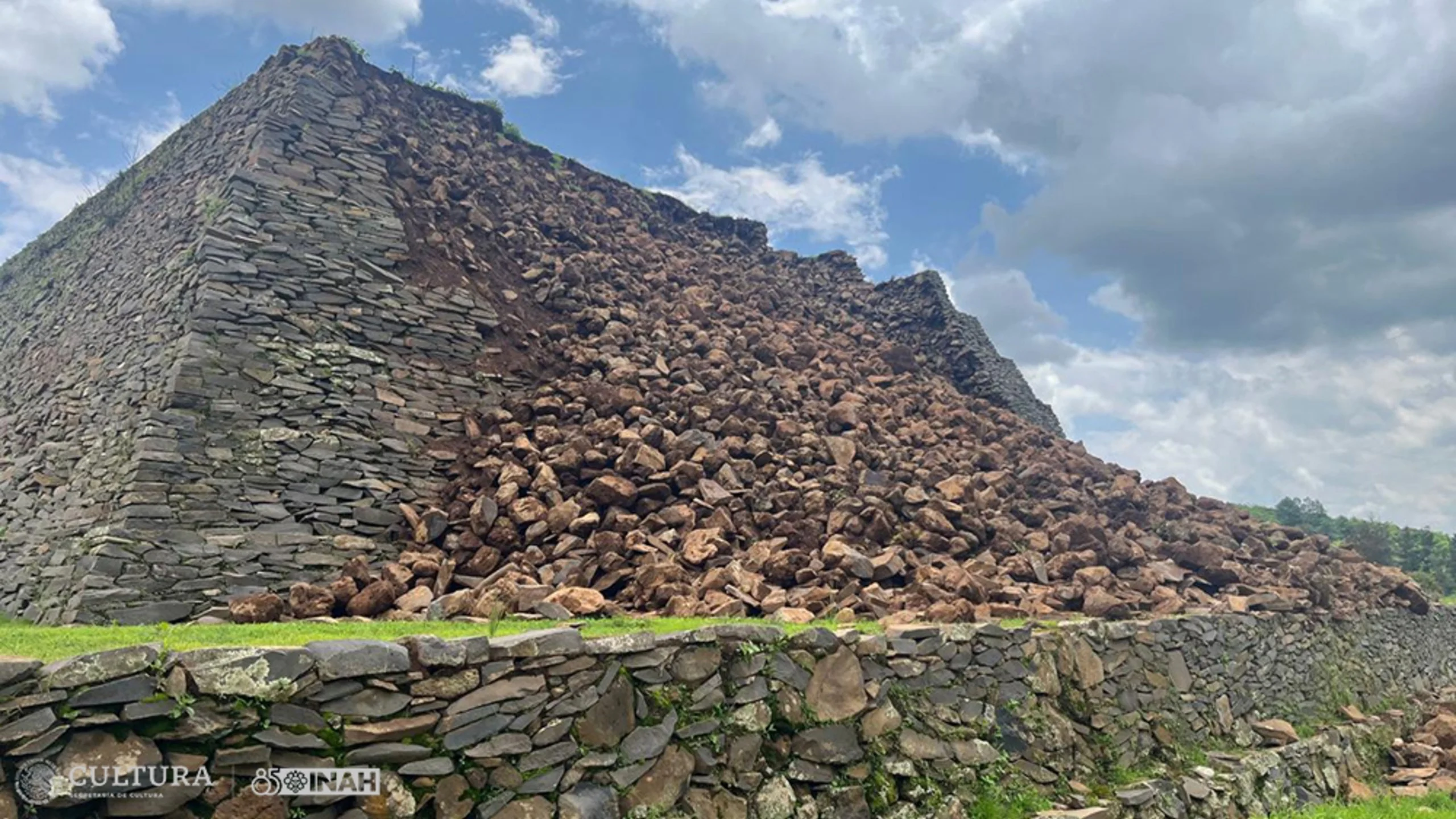
Bad Omen: An ancient pyramid in Mexico collapsed into a heap of rubble after weeks of heavy rainfall, highlighting growing threats to cultural heritage from climate change. Source: sciencealert.com.
What Happened at the Ihuatzio Site
On July 29, 2024, a 15-meter-high pyramid at the Ihuatzio site in Mexico collapsed. The structure belonged to the Michoacán Kingdom civilization and is one of the best-preserved monuments of Indigenous Nahuatl-speaking groups.
The site was first occupied over 1,100 years ago. Early communities built a complex social and religious system around ceremonial pyramids. Only one pyramid at the site was damaged. But INAH reported that at least six of its stepped bodies are now in disrepair.
These include the outer wall, core, and retaining walls. The collapse followed weeks of intense rainfall. The south wall gave way suddenly, forming a pile of rubble. The event has drawn both scientific attention and community mourning.
INAH said the collapse wasn’t sudden. It was the result of decades of environmental stress. Fluctuations in temperature and moisture gradually weakened the structure over time.
Root Causes: Weather and Past Interventions
INAH blamed extreme weather for the collapse. Before the event, Mexico faced its worst drought in 30 years. Several lakes, including Lake Pátzcuaro, dried up completely.
This dry period caused stone to expand and contract repeatedly. It created micro-cracks that spread through the pyramid. Then, thunderstorms hit the region for weeks.
The rain soaked the south facade of the pre-Hispanic building. High temperatures during the drought had already stressed the stone. When rain came, water seeped into cracks. This led to internal pressure and structural failure.
INAH also noted that past conservation efforts contributed to the problem. In the 1980s and 1990s, workers used cement and modern adhesives. These materials were not compatible with the original stone. They degraded over time, especially when exposed to moisture.
Historical and Cultural Significance
The Ihuatzio site was a center of political and spiritual life for the P’urhépecha people. This Indigenous empire resisted the Aztecs and built a rich tradition of ritual and governance around pyramid temples.
Tariakuiri Alvarez, a living P’urhépecha member, said his ancestors would have seen the collapse as a ‘bad omen’. In traditional P’urhépecha belief, natural events like falling structures signaled divine displeasure. The gods, believed to live in mountains and rivers, communicated through such signs. The collapse would have been a call for spiritual reflection or a warning about community misdeeds.
Global Patterns of Pyramid Damage
Similar damage has occurred elsewhere. In 2010, Hurricane Karl, a Category 3 storm, hit Veracruz. It damaged a pyramid at La Joya. The structure was made of earth and soil.
High winds tore off a protective tarp. The exposed structure faced torrential rain. Weeds had grown over the site, weakening the soil. A severe drought later worsened the damage.
In 2021, Sudan’s Pyramids of Meroë saw significant deterioration. Researchers found 15 of 19 pyramids were severely damaged—up from 12 just seven years earlier. These pyramids, built between 1070 BCE and 550 CE, face threats from sand, wind, heavy rain, and flooding.
This has accelerated the degradation of ancient structures worldwide.
How Climate Change Affects Ancient Structures
Many pyramids use clay-based materials. Clay swells when wet and shrinks when dry. Rapid shifts in moisture—like sudden rain after a long drought—are now common due to climate change.
These shifts create repeated stress on stone. Over time, this leads to cracking and structural failure. Climate scientist Jørgen Hollesen warned in 2022 that increased rainfall, more frequent extreme weather, higher temperatures, and rising seas are not new risks. They are worsening existing vulnerabilities.
These threats affect sites beyond Central and South America. Ancient monuments across the globe are now at greater risk due to changing weather and environmental degradation.
What’s Being Done to Respond?
In June 2025, INAH announced a restoration project for the Ihuatzio site. Three million pesos have been set aside. Specific details about the work remain unclear.
The project may include traditional materials, improved drainage, and a reevaluation of past conservation methods. In 2004, a pyramid at the Maya site of Tazumal in El Salvador collapsed. The part that fell was a concrete reinforcement added during a conservation effort.
This shows that modern materials can undermine long-term stability. It highlights a key lesson: reconstruction must be carefully designed to avoid past mistakes.
Why This Matters
The collapse is not just a local event. It is a visible sign of how climate change threatens global cultural heritage. As extreme weather grows more common, ancient monuments—built with simple materials—are increasingly at risk.
Protecting these sites requires climate action and a reevaluation of preservation methods. Scientists and communities must learn from these events to ensure history is not lost to the weather.
Sources & further reading
Featured image: 'Bad Omen': Ancient Pyramid in Mexico Collapsed Into A Heap of Rubble. Via original publisher. Image source