Calm has launched Shift, a new in-app experience that helps users feel better in the moment using bilateral audio.
What Is Shift?
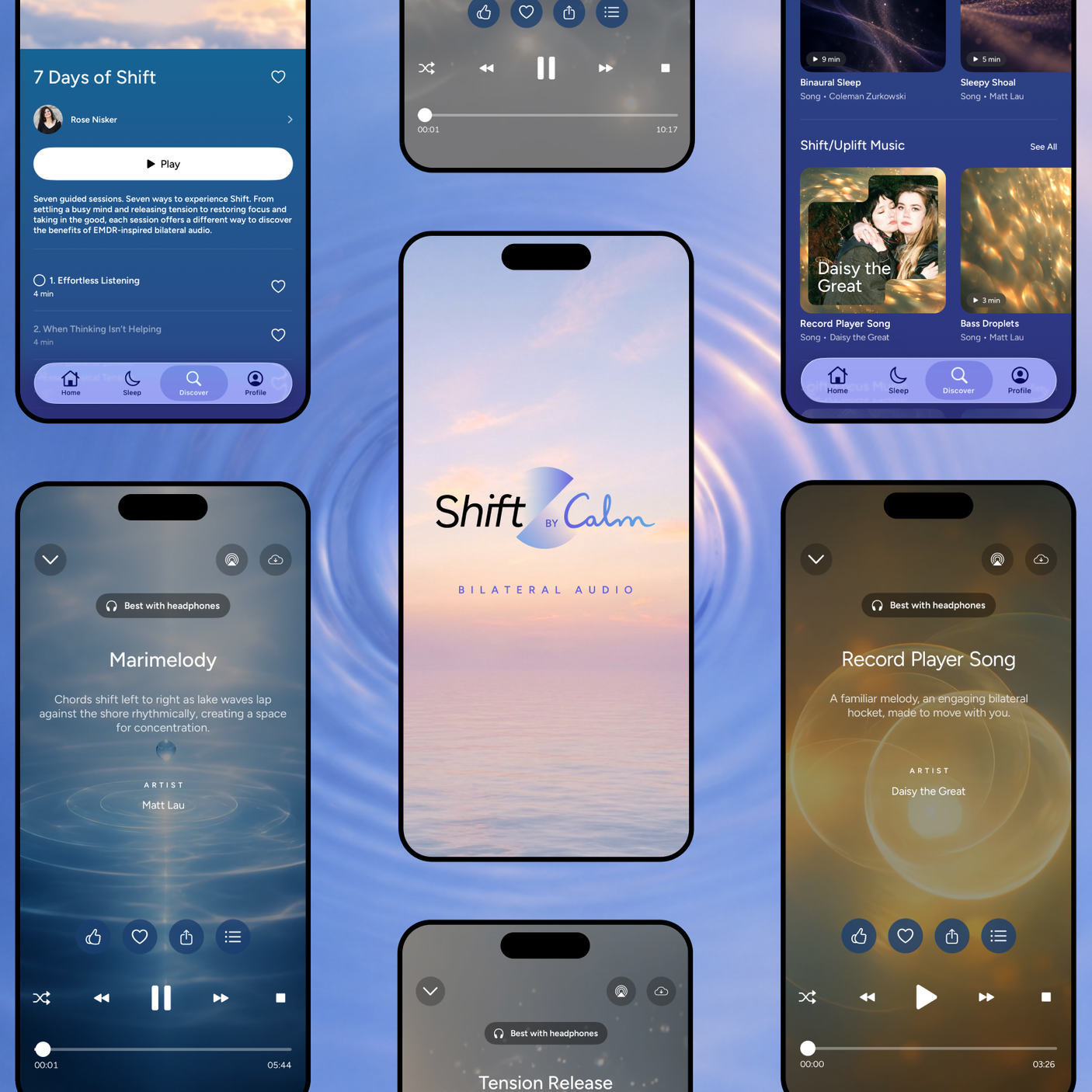
Shift is a dedicated feature in Calm’s app that uses bilateral audio to support emotional well-being. It moves sound intentionally between the left and right ears, creating a rhythmic pattern inspired by therapist techniques.
No prior training or technical skills are needed. Just headphones and a few minutes of listening are all that’s required.
Unlike traditional meditation, which often requires silence or structured practice, Shift offers a quick, sensory-based way to shift mood. It uses sound patterns to influence mental clarity and emotional balance.
This is not a replacement for meditation or therapy. Instead, it expands the tools people have for managing emotions in real time.
Four Core States and Their Purpose
Shift is built around four emotional states, each designed for a common daily need:
- Focus: Clears mental fog and improves concentration. Ideal for work or study sessions.
- Release: Helps let go of daily stress. Great for ending a long meeting or calming overthinking.
- Uplift: Boosts mood and energy. Useful when feeling low or drained.
- Sleep: Prepares the body for rest. Designed to wind down before bed.
Each track pairs with looping visuals that respond to the audio, enhancing immersion and emotional connection.
Content Offerings at Launch
At launch, Shift includes three main components:
- A 7-Day Guided Program: Narrated by Calm teacher Rose Nisker, it offers daily sessions with affirmations and a bilateral track. The program builds a consistent rhythm of self-awareness.
- Four New Bilateral Tracks: One for each state. Each is carefully crafted to trigger the intended emotional shift.
- Over 20 Additional Tracks: Users can explore ambient, nature, and genre-specific music—all in the bilateral audio format.
One standout track is an exclusive bilateral remix of ‘The Record Player Song’ by Daisy the Great. The original, released in 2018, has over 200 million streams. The new version uses hocketing—a technique where melody is split and passed between voices—to create a natural bilateral effect. It has gained popularity on TikTok, where users share videos of the layered vocals.
Why This Matters: A Shift in Mental Wellness Design
Calm began with meditation, expanded to sleep with Sleep Stories, and now introduces Shift to meet immediate emotional needs. This shows a growing trend in mental health tech—moving from long-term practices to real-time tools.
Dun Wang, CEO of Calm, said the company never intended to be a meditation-only app. ‘We want to be a place people can come to feel better, in whatever way they need,’ he said. ‘Shift is next—leveraging bilateral sound to offer trusted, human support that leaves users feeling better than when they started.’
Since 2022, when Calm added bilateral audio to its music library, interest has grown. The concept of ‘brain flossing’—using bilateral stimulation to clear mental clutter—has gone viral, showing a cultural shift in how people view audio-based emotional regulation.
Expert Validation and Safety
To ensure Shift is safe and effective for everyday use, Calm worked with consultants certified by the EMDR International Association. These experts specialize in trauma-informed therapies and bilateral stimulation.
Roy Kiessling, an EMDR clinician, said Calm has elevated its self-soothing programs. ‘I appreciate the care taken to emphasize relaxation and emotional comfort. Shift offers a welcome, accessible way to use bilateral stimulation in daily life.’
Who Can Use It?
Shift is available only to Calm Premium subscribers. Users must download the app from the Apple App Store or Google Play Store and subscribe to Premium at $79.99 annually.
The feature is for self-guided use and does not require professional supervision. It supports daily emotional well-being, not clinical treatment.
How Bilateral Audio Works
Bilateral audio moves sound between the left and right ears. This creates a subtle rhythm that may stimulate brain areas involved in emotional regulation, like the prefrontal cortex and limbic system.
Therapists have used similar techniques for decades, especially in trauma and cognitive behavioral therapy. These methods aim to reorganize neural pathways linked to stress and anxiety. Calm adapts these principles for everyday use, making them accessible without clinical training.
What to Watch Next
Calm and Daisy the Great will create multiple tracks together for Shift. This reflects Calm’s strategy of partnering with artists to produce content that resonates with real users.
As more people explore bilateral audio, its role in daily emotional wellness may grow. It could become a standard tool in mental health apps as interest in accessible, non-invasive tools continues to rise.
For more information, visit Calm’s Shift blog post or explore the full content at calm.com. A direct link to the Shift experience is available at calm.onelink.me.
This reflects broader cultural engagement with audio-based mental wellness tools. While Shift is not a substitute for professional care, it offers a trusted, accessible way to support daily emotional well-being.
Sources & further reading
Featured image: original publisher image. Via original publisher. Image source